How a Proposal Photoshoot Works: From First Message to Final Photos
Date of publication: 29 Aug 2026 | Updated: 29 Aug 2026When a man writes to me for the first time, he usually has a lot of questions. How does this whole thing work? How do I keep it a surprise without getting caught? Where do people even go down on one knee? And somewhere nearby lives a quieter question that few people say out loud: isn't it a bit strange to hire a photographer for such a personal moment?
It isn't. According to The Knot's 2023 study (9,318 couples in the US), 1 in 4 people who proposed hired a photographer or other helpers, which is more than double the 2019 number. And 38% of proposals happen during a planned trip. So if you're planning to propose while travelling and want this moment in photos, you're doing everything right, and the mechanics have been worked out long ago.
I've been photographing proposals for many years, the recent ones in Lisbon, and the questions from clients repeat almost word for word. So first, a short plan that covers the essentials, and then I'll tell you how it all looks from the inside, with real examples.
The short version: step by step
- You write to me. Two sentences are enough: your travel dates and what you have in mind. We'll sort out the rest in conversation.
- We narrow down the place. First the type of backdrop (ocean, city, gardens), then the exact spot and time. My article with 17 places to propose in Lisbon and Sintra helps a lot here.
- We book the date. After that you can exhale, the organizing is on me.
- A day or two before, we confirm the plan. We agree on live location sharing and you put my contact on mute. And on the day itself, when you're dressed and heading out, just take a selfie together and send it to me.
- The day. I'm at the location at least half an hour early, looking like an ordinary tourist. You simply walk in as planned.
- The moment. You go down on one knee, I shoot from a distance. I come closer once the main words have been said.
- Five minutes to breathe. We meet, laugh about how it all went, and then a calm 40-minute session: portraits, hugs, the ring up close.
- The gallery. Every good shot, fully edited, online gallery within 5 days.
That's the whole mechanism. Now the details, because each of these steps has the small things that decide whether the surprise stays a surprise.
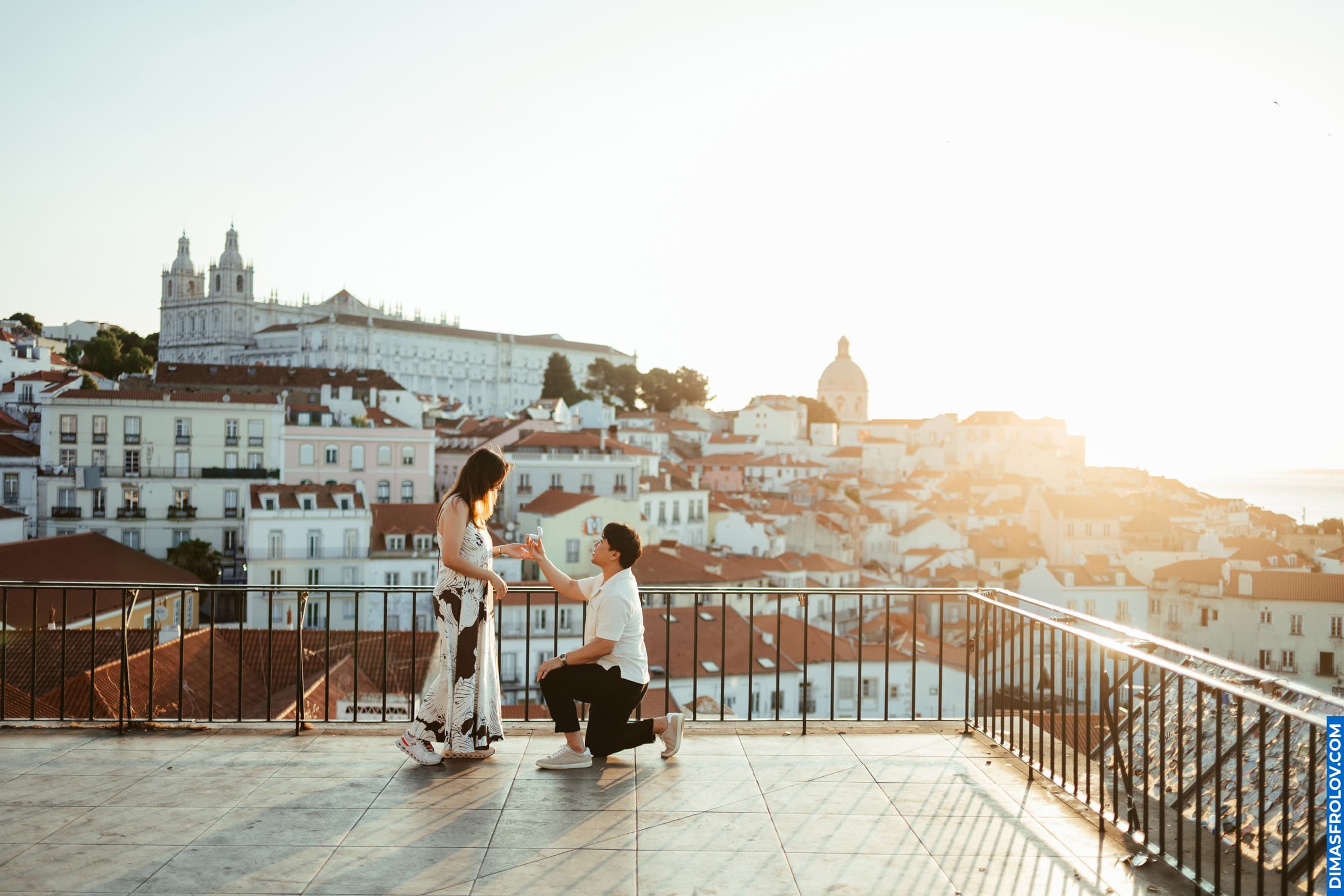
Where it all starts: the first message
Here's a real first inquiry I once received:
Hello! I am traveling to Lisbon with my girlfriend, and I am thinking of surprising her with a proposal. The possible dates are ___. I prefer some natural background.
And that's a perfectly normal first message. It has the essentials: there will be a proposal, there are dates, there's a hint about the backdrop. You don't need more than that to start.
Very rarely does an inquiry arrive with a specific location already chosen. When it does, I take my hat off: the person searched and compared on their own, and it makes the organizing much easier. But more often, someone who has never been to Lisbon simply can't picture which of these places would suit them. The city sits on hills above a river, with ocean cliffs and the palaces of Sintra all around, so the problem is too many options, not too few.
Let me be honest about how the roles split: I know Lisbon well, but I don't know your story. Which places you two have talked about, what she dreams of, what matters to you both, only you know that, and nobody knows the person you want to marry better than you do. So the first part of our conversation isn't booking, it's talking about the place: I lay out options with their pros and cons, you tell me what will resonate with her. I narrow down, you decide.
Surprise or no surprise
This question used to torment me too, back when I was just starting to shoot proposals, which is why I have a separate article on whether to propose as a surprise. The short version: there are two working scenarios.
The first is a pure surprise. She suspects nothing, I'm disguised as a tourist, and your only responsibilities are the words and not dropping the ring.
The second is the "photoshoot as a cover". You book an ordinary couple session, she's ready, hair and dress in place, the photographer is already next to you, and at some point you simply go down on one knee. A little less surprise, but also less risk, and I can stand 3 metres away instead of 30.
Both options work. And if you're afraid that "she already suspects something, the surprise is ruined", here's a number that helps: in The Knot's 2024 study (over 7,800 couples), 83% of proposals still came as a surprise, and more than half of those people knew a proposal was coming "soon".
Knowing a proposal will happen someday and knowing it's happening right now are two very different things.
Either way, if you've chosen the surprise, I'll help with everything except one thing: the proposal itself is yours to make.:)
Place, date and time: where the details hide
Once the type of location is clear, I start suggesting specific spots. Every neighbourhood has its quirks: one gets crowded after lunch, at another the wind carries away words and hats alike, at a third the best light is only in the morning.
All my favourite spots, with honest notes on light, crowds and whether each one actually works for a secret proposal, are collected in Best Places to Propose in Lisbon: 17 Romantic Locations.
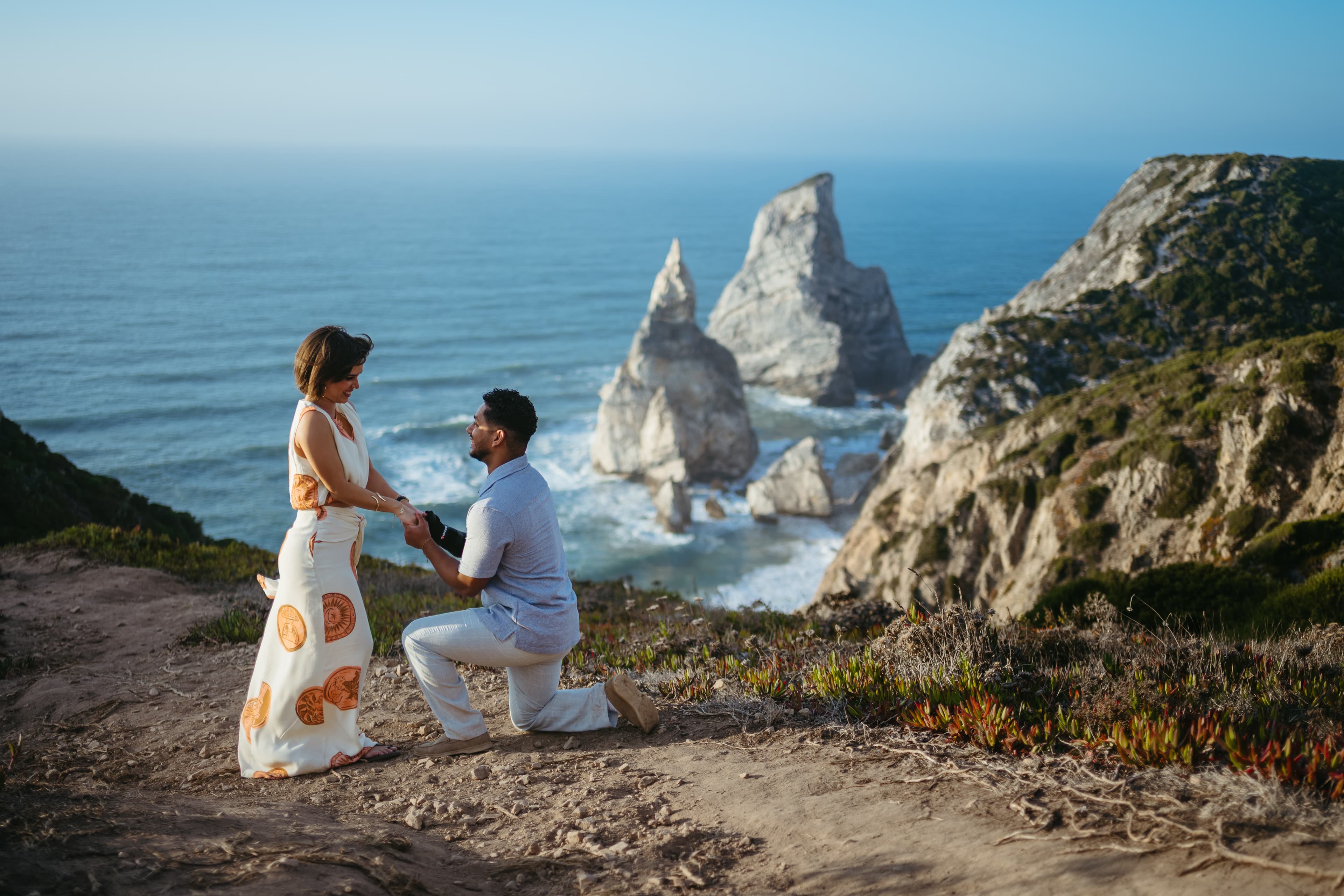
Time of day. We choose it together, depending on the place and the idea: some spots are best early in the morning while they're still empty, others are all about the evening light. If the scenario is built around sunset, I recommend setting the proposal about 40 minutes before it. Two reasons. First, the normal part of the shoot runs about 40 minutes, so the session lands right on the golden light, and after sunset there are still 15-20 minutes with colour in the sky. Second, it's a buffer: people run late, and it's better to have a margin than to propose at dusk. We never put the time right on the sunset itself: under cloud cover it's already dark an hour before it.
Season. In Lisbon, sunset drifts between roughly 17:15 in December and 21:05 at the end of June. So the same "proposal, then dinner" idea works perfectly in summer, but in winter it means shooting at 5pm. Not a problem, just something to know in advance when you're booking the restaurant table.
Weather. By the climate normals of IPMA, the Portuguese weather institute, November and December in Lisbon average about 10 rainy days a month, while in summer rain is practically nonexistent. So for autumn and winter dates I always keep a plan B: a backup location under a roof, or a day or two of flexibility. And how perfect the weather has to be is your call: for some people a clear sky and golden light are non-negotiable, and then we build in backup dates, while others actually like the soft light of an overcast day. Both approaches work, the point is to talk it through in advance.
Your plans. You have your own trip programme, and the proposal has to fit into it without raising suspicion. So I adapt to you, not the other way round: if it would look odd for her to end up at a viewpoint at 7am, we look for another option.
Once the date and time are agreed, all that's left is to book, and wait.
The day: how it looks from my side
I arrive at the location at least half an hour early. I check that everything is as we planned: that nobody has put up a construction fence in the middle of the terrace, that someone isn't shooting a wedding on our exact spot, that a painter with an easel hasn't claimed our place. If something's off, I still have time to rework the plan.
From you I need 3 things, all agreed in advance:
A photo of how you look today. On the day, when you're dressed and heading out, take a selfie together and send it to me. In the early stages I keep my distance, so I'll be recognizing you not by your face but by silhouette, the colour of the dress, the jacket. "A man in a blue shirt with a girl in a white dress" can be found in a crowd in seconds.
Live location. Turn on location sharing on your phone and share it with me. That way I see in real time where you are, and I don't panic about whether you got lost or just stopped for a coffee. It's a lifesaver when you're running late or, the opposite, ahead of schedule.
My contact on mute. Put my WhatsApp on mute. A message from "Dimas Photographer" popping up on the screen while the phone is lying on the table would ruin everything. But do check the phone from time to time: if anything changes at the location, that's where I'll write.
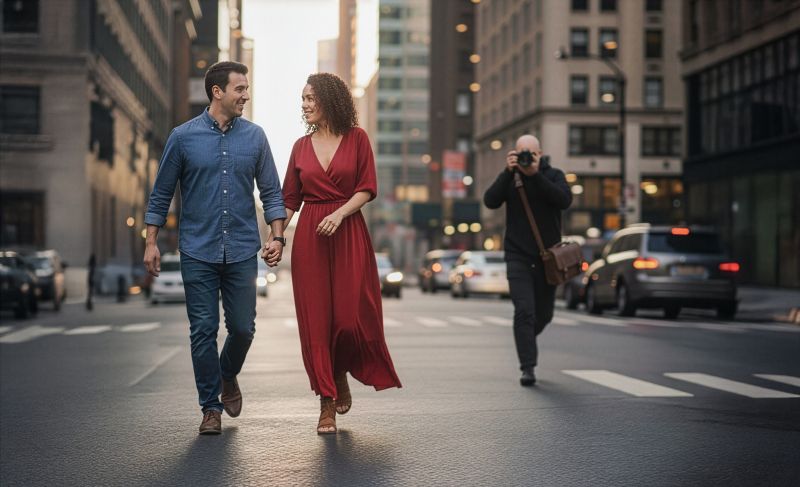
Then I turn into an ordinary tourist. I photograph the views, wander around, take my time. I've lost count of how many times people walked right past me without guessing I was there "on the job".
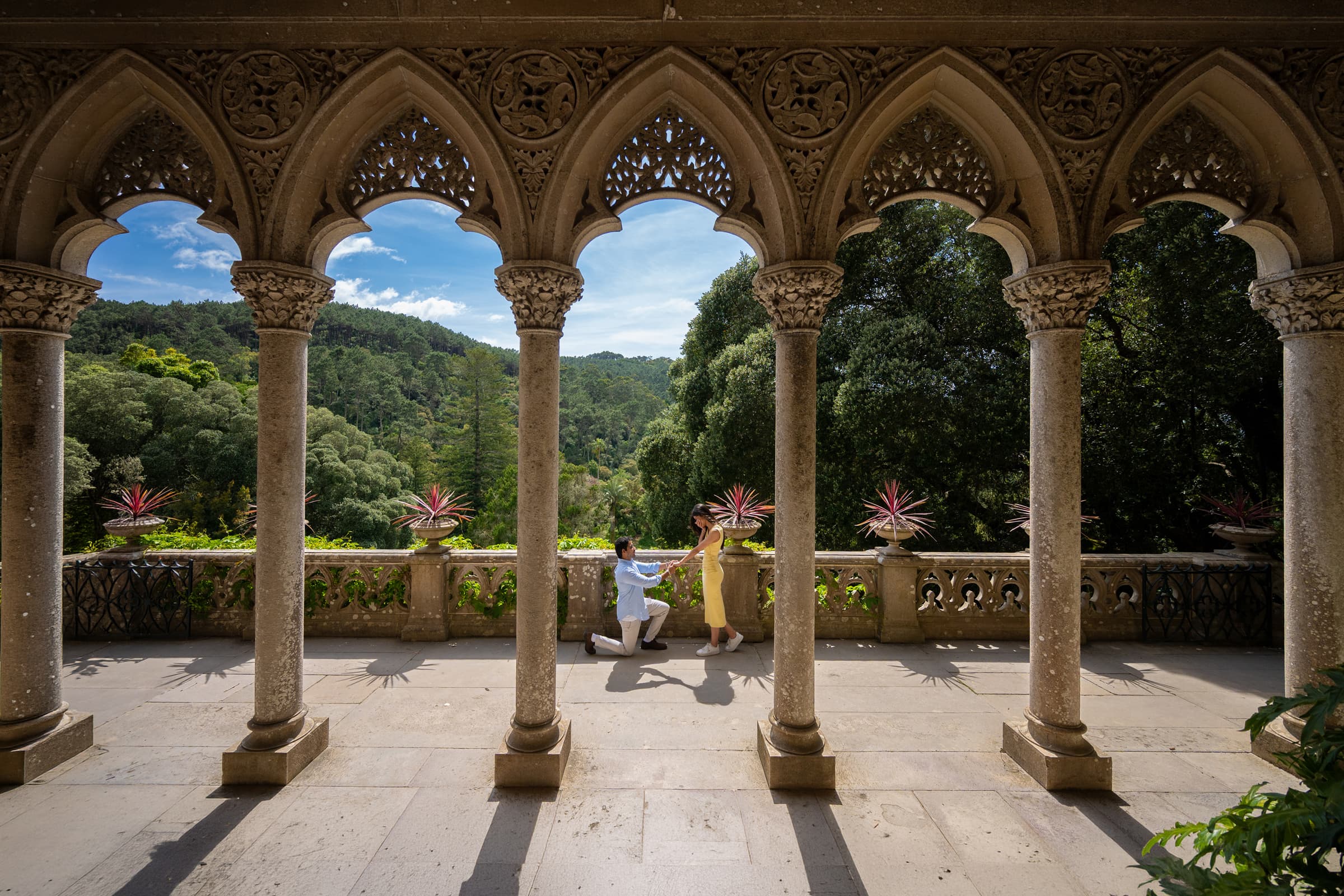
The moment
When you appear at the spot, I already see you. You stroll, you talk, you drift towards the agreed point. All her attention is on you, and that's exactly why I don't exist. This isn't luck, by the way, it's psychology: under strong emotion, a person's attention narrows to what matters most and the periphery simply drops away (the research literature calls it arousal-biased competition, there's a major 2011 review by Mather and Sutherland). What matters most right now is you. A photographer 20 metres away doesn't pass the filter.
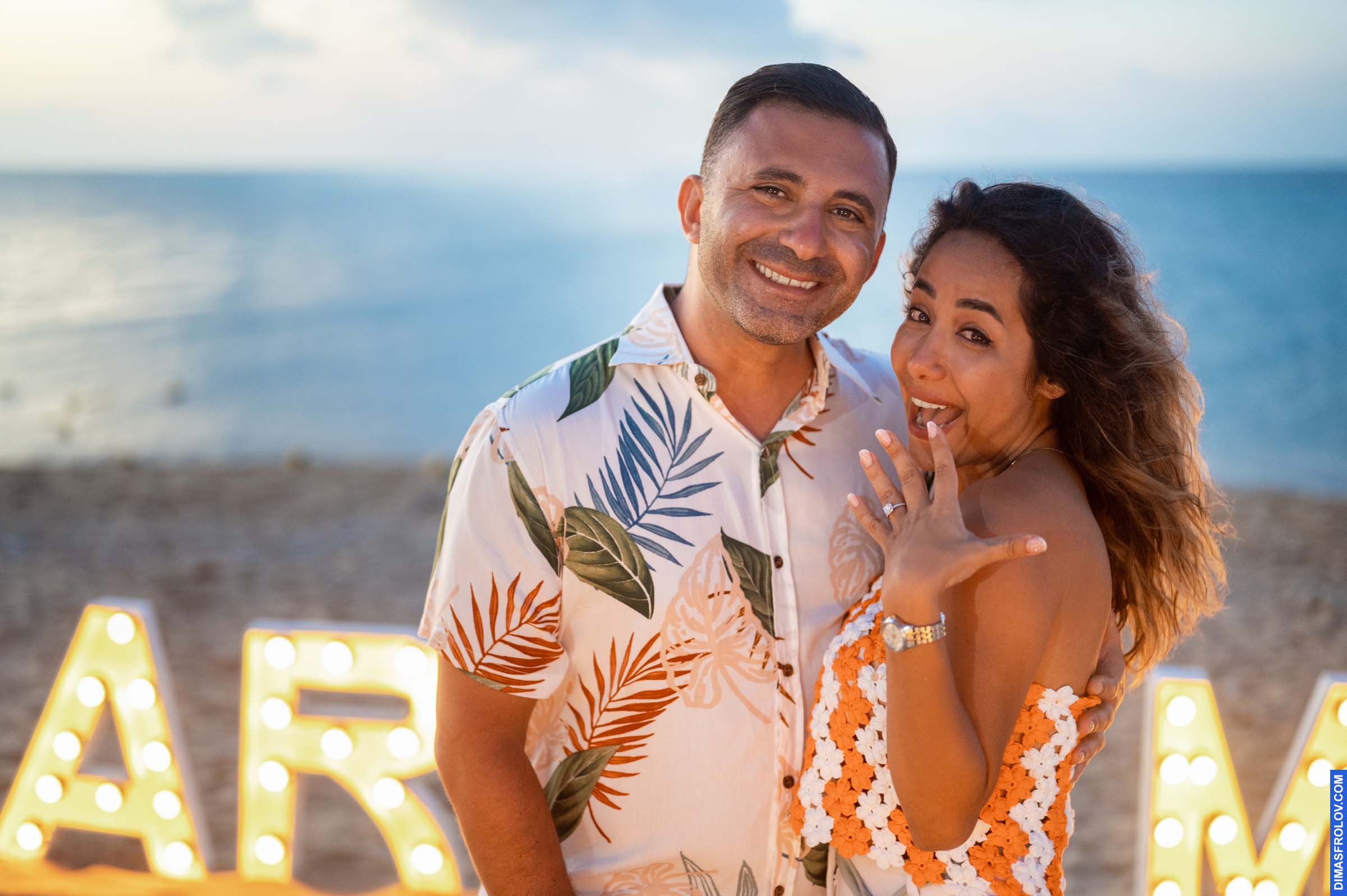
And once you're down on one knee, my job becomes simple. I gradually move closer and shoot everything: her hands at her face, laughter mixed with tears, the hugs, the "yes" you can hear even without sound.
I'll be honest about myself. My biggest stress in this whole business is those last minutes of waiting: I sit at the spot, watch the clock, worry whether it will all go well, whether someone unexpected will wander onto our point. That's why I always plan more options than we'll realistically need.
It turns out I'm about as nervous as the man who's about to go down on one knee. So I'm on your side, in the most literal sense. 😄
The first five minutes after the "yes"
Almost nobody writes about this part, and they should. When she notices the photographer, three things are happening in her head at once: the biggest event of the year has just happened, a stranger with a camera is standing nearby, and her heart is beating loud enough for the neighbours to hear. She's happy, overwhelmed, and definitely not thinking about a photoshoot.
So I don't start commanding "now stand over here". I come up, say hello, introduce myself. We simply talk through how it went: who suspected what, how his hands were shaking, how the ring almost stayed in the pocket. Five minutes of laughter do more than any posing instructions: she exhales, and I get a feel for the couple's temperament and how to work with them.
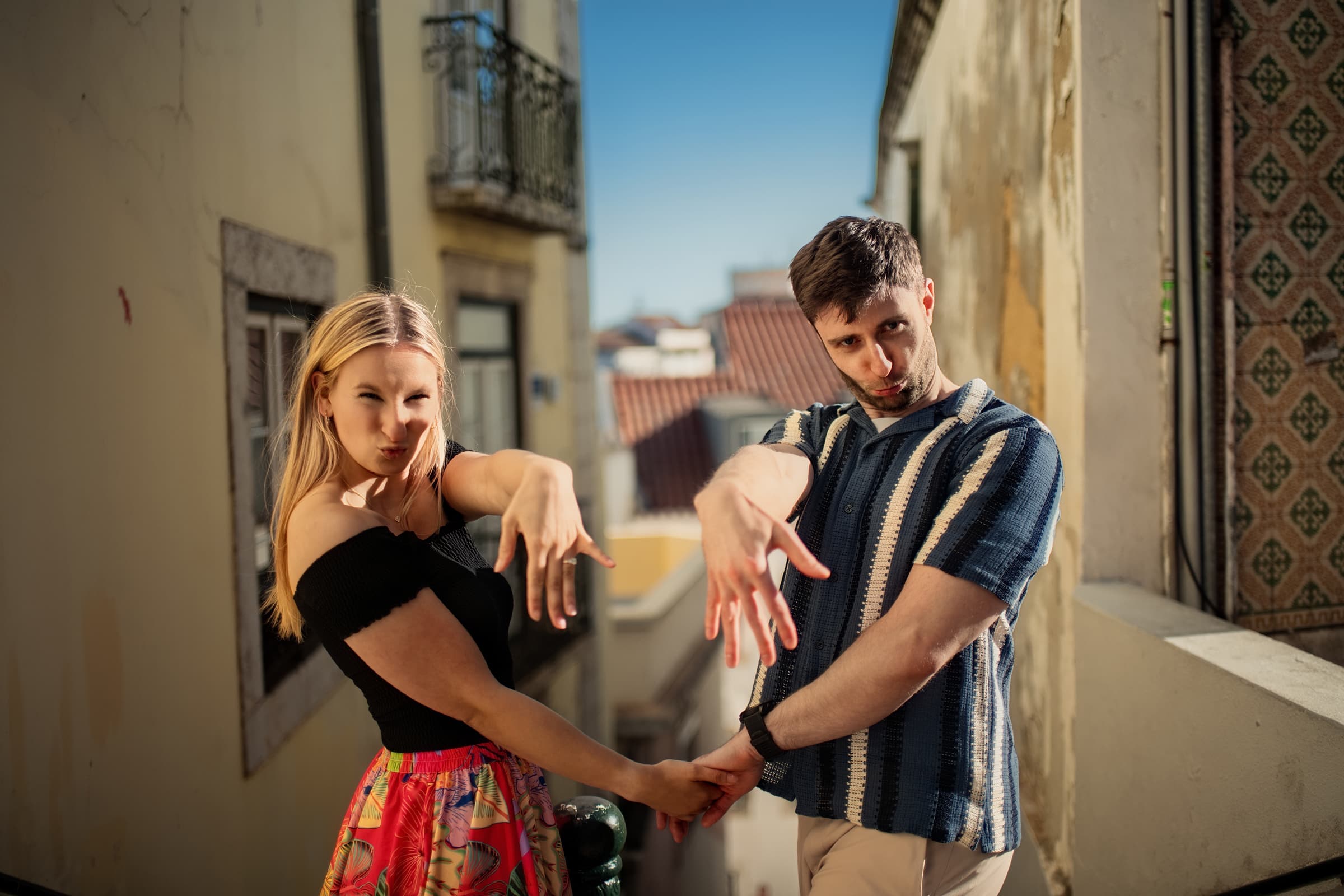
The session after: the calm part
All the remaining time we walk around nearby: portraits, hugs, kisses, the ring up close. Sometimes we redo the proposal moment itself in a controlled shot: from a better angle, once the crowd has cleared, or in a completely different place with different light. This isn't "staging instead of truth", the real moment is already captured. It's simply one more beautiful frame to keep, made without the trembling knees.
I do the directing, you don't need any skills. The people who are "not photogenic and can't pose" usually make the liveliest photos, because a camera was the last thing on their mind a moment ago.
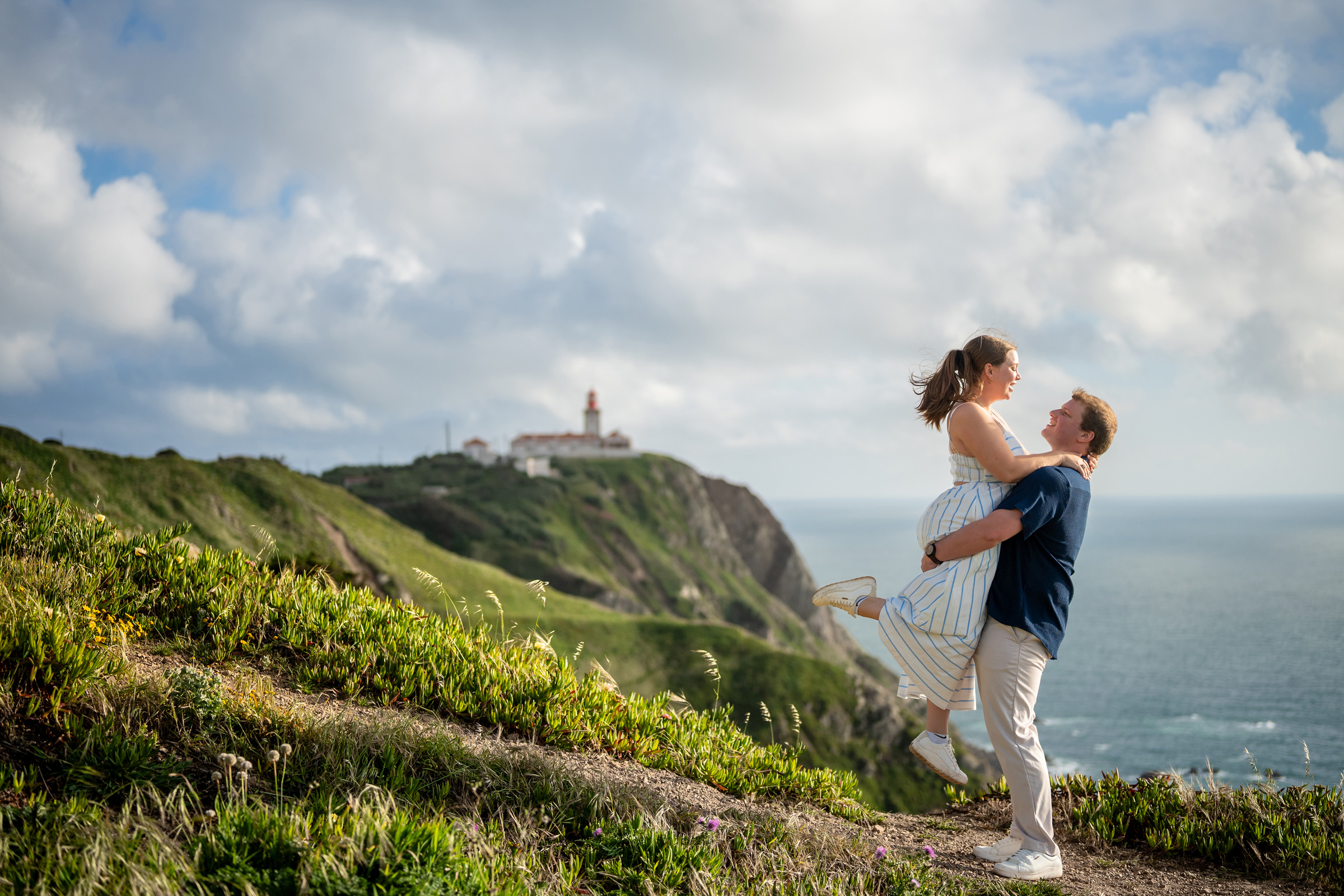
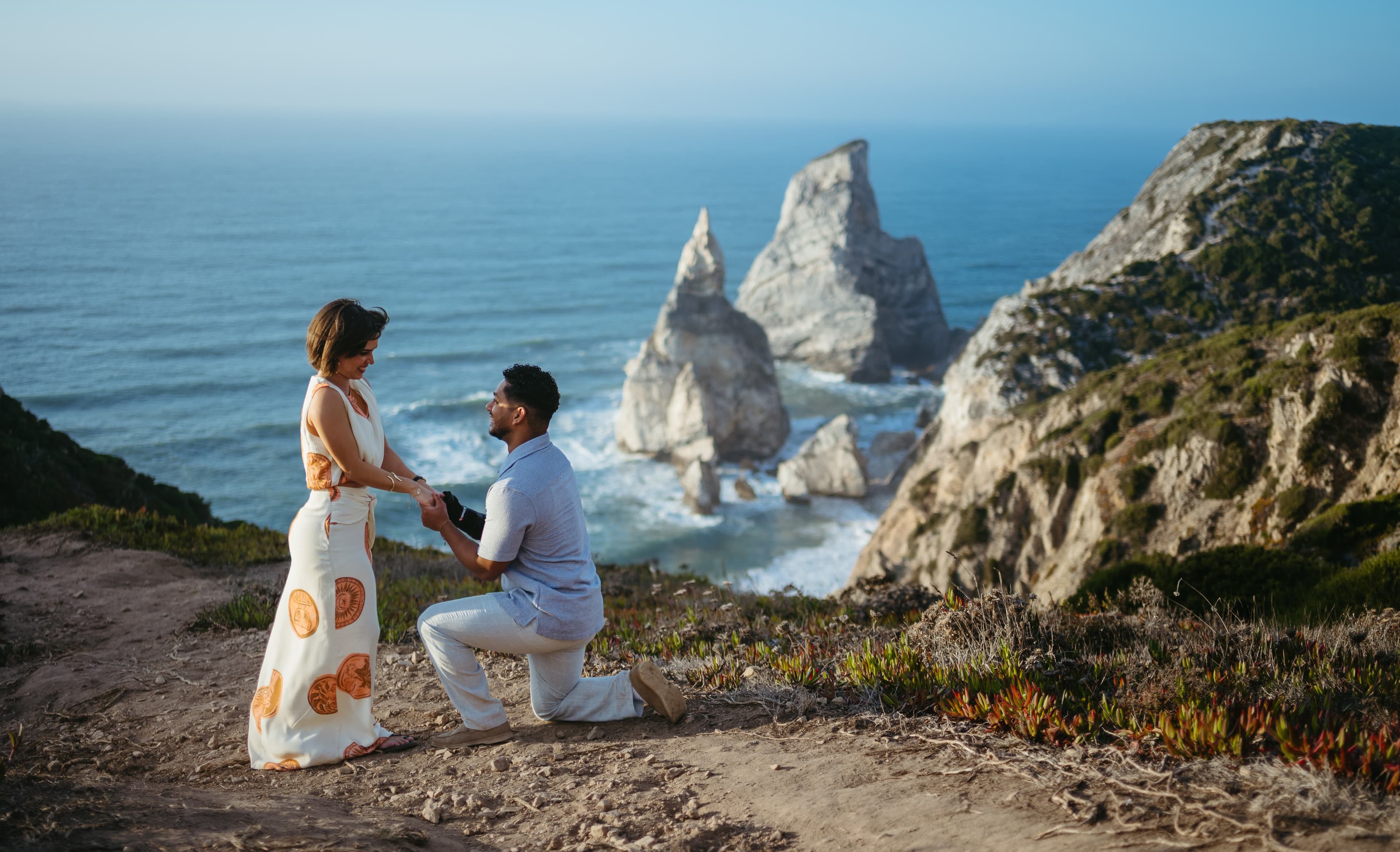
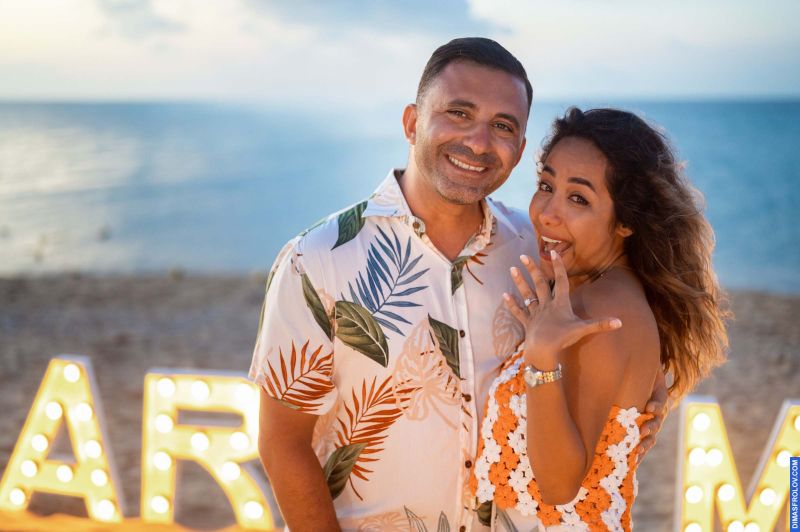
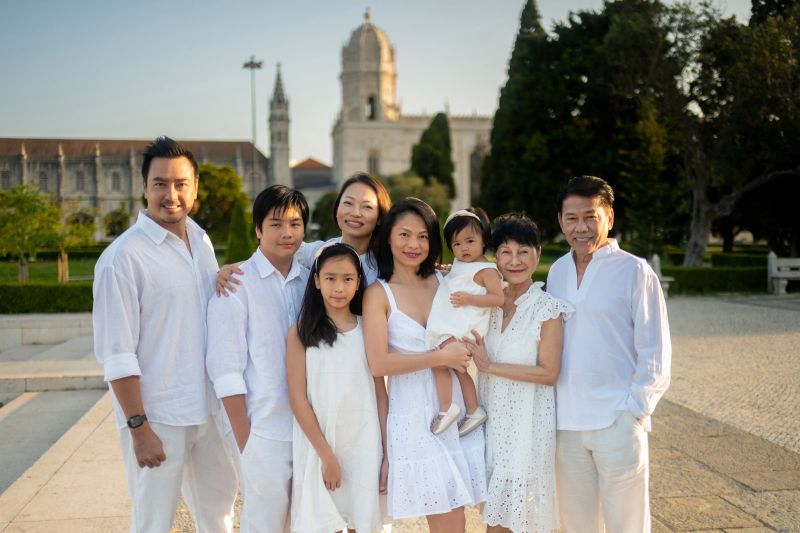
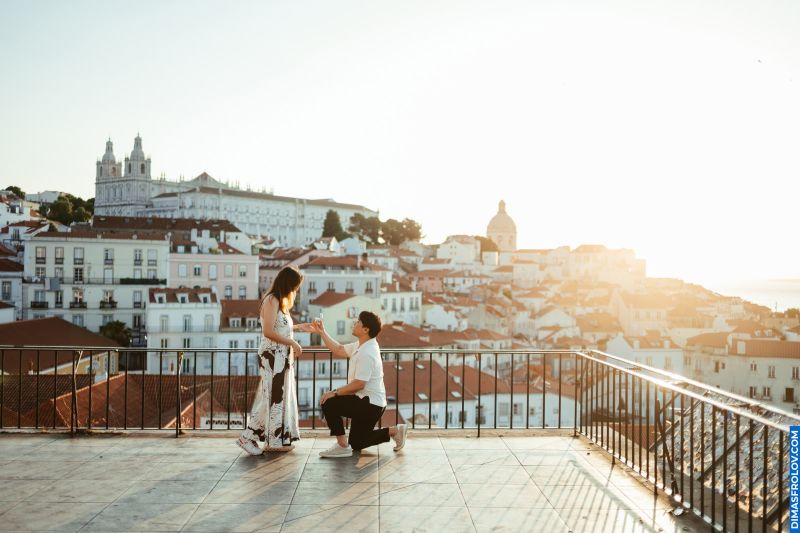
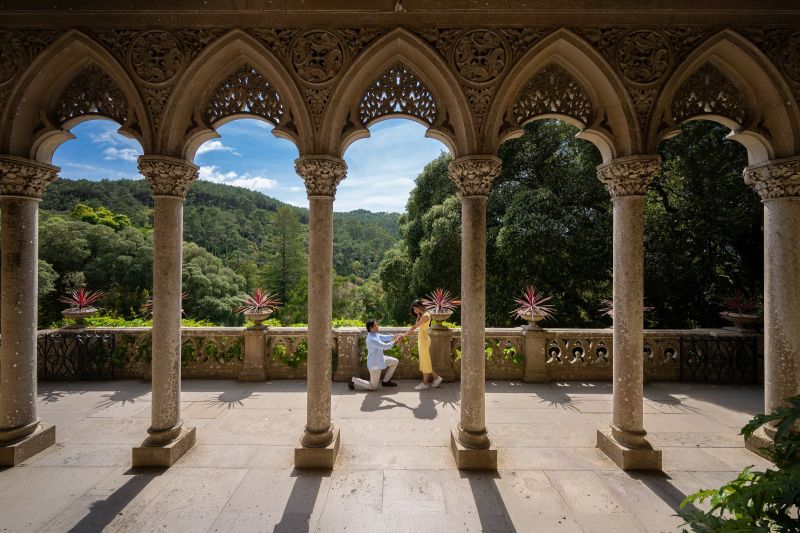
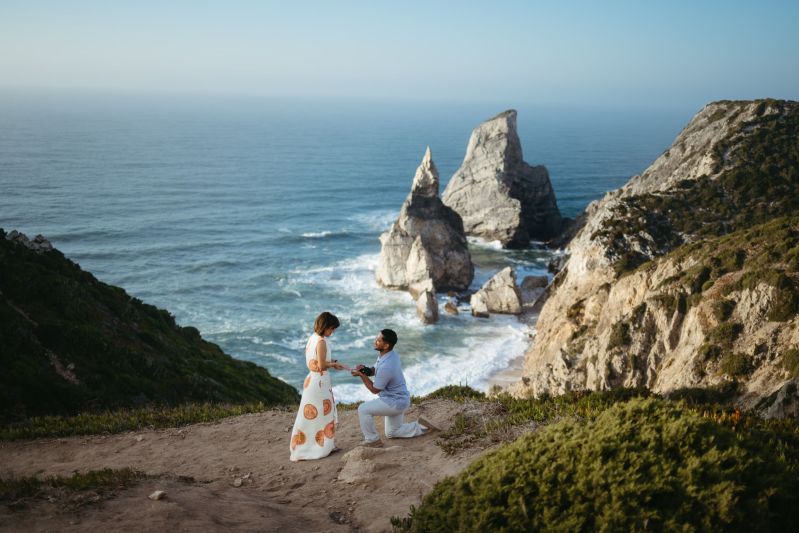
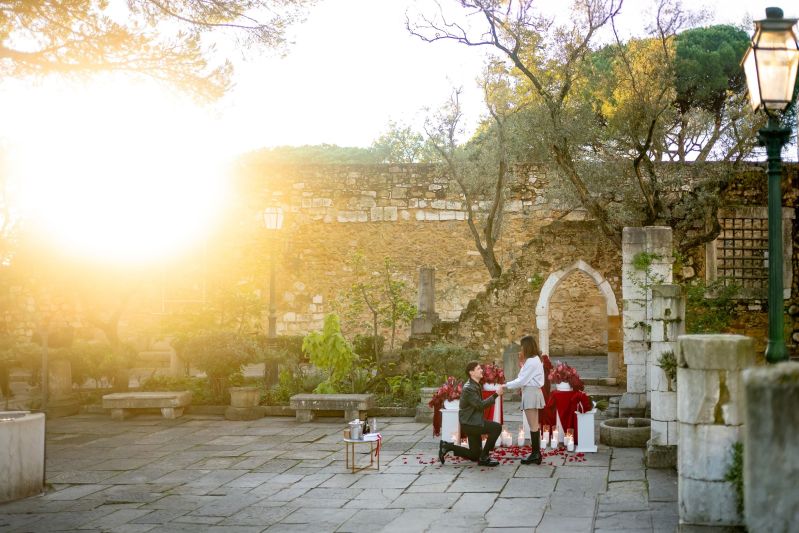
This is easier to see than to explain. Here are 4 full proposal shoots I photographed, from the moment itself to the calm part that follows:
Why photograph it at all
The most honest answer: because memory doesn't work the way we think it does. Back in 2003, psychologists Talarico and Rubin showed it on memories of September 11: vivid emotional memories crumble over time just like ordinary ones, the only difference is that our confidence in them stays high. In 5 years you'll be convinced you remember that evening in detail. The details, by then, will be different ones.
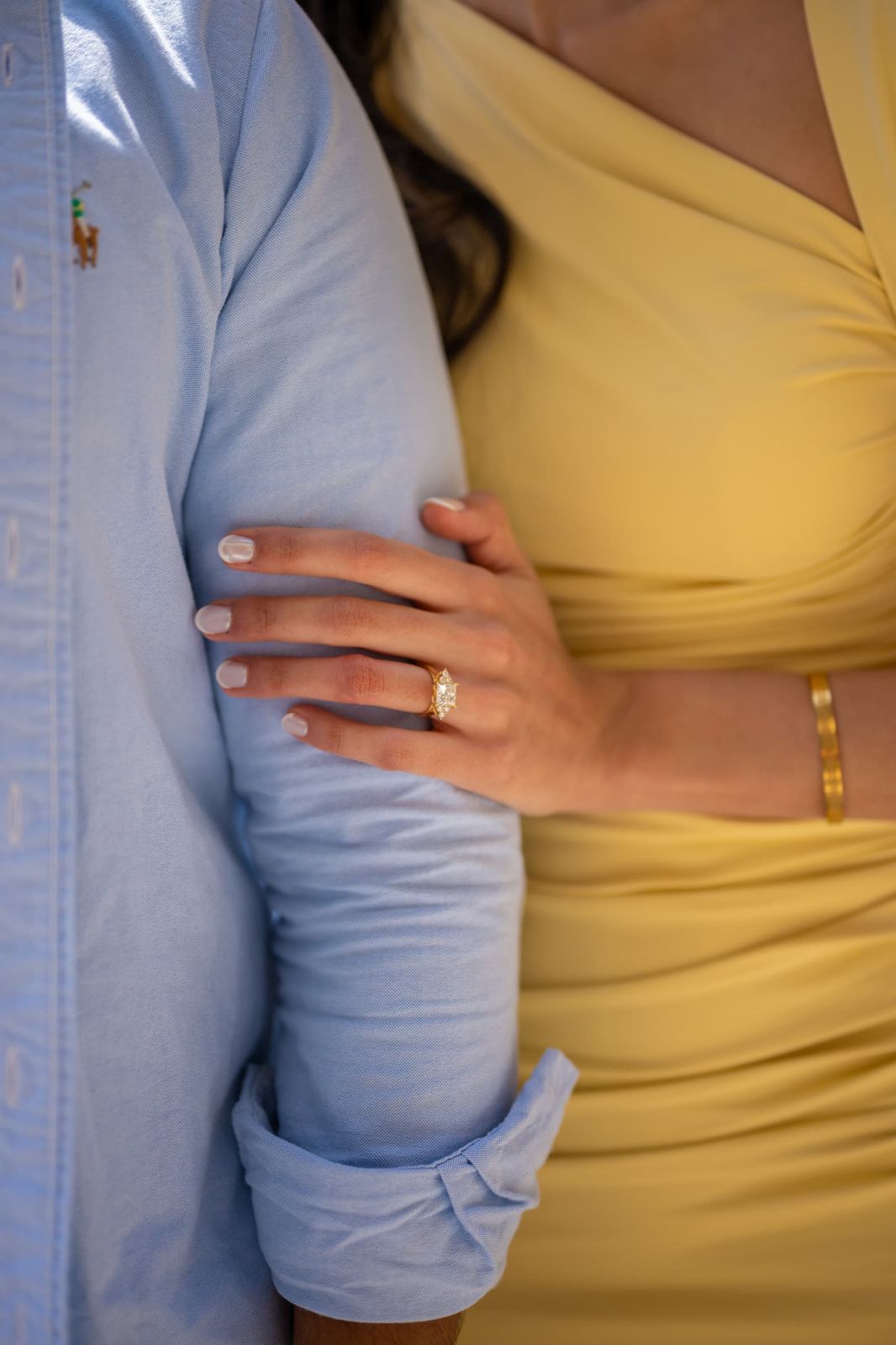
Photographs solve this problem bluntly and reliably. Her face in the first half-second, the hands at her lips, the light of that particular evening: it stays exactly as it was.
What happens next
After the shoot I select and edit every good frame myself (no hard "20 photos in the package" limit, I only drop duplicates and technical rejects) and send an online gallery in high resolution, usually within 5 days.
If you're planning a proposal in Lisbon, have a look at real proposal stories I've photographed, the service page and the rates. Then just write to me with your dates and a couple of words about the idea. Two sentences are enough, I've seen even shorter inquiries turn into wonderful proposals.
The rest of the organizing is on me. We'll be nervous together.
I shoot in Lisbon and across Portugal. More about my work: photographer in Lisbon.