Airbnb Photography in Lisbon: What Professional Photos Actually Change
Date of publication: 08 Sep 2026 | Updated: 09 Sep 2026You already have photos of your flat. Someone took them (you, the previous owner, the agency, a friend with a good phone) and the listing is live on Airbnb, Vrbo or Booking.com, often on all three at once. The question is not whether you need photos. That much is obvious, you do. The question is whether a good shoot changes anything in your business, and whether the figure everyone quotes about higher earnings is true.
So let me start with that number, because it bears directly on what my work costs.
Content Plan
The number every photographer quotes
Search for a photographer in Lisbon and you will be told that professional photos bring 40% more bookings. Sometimes 28%. Sometimes that listings with professional photos are booked 2.5 times more often. Often you will see a precise, confident figure: $2,521 more per year.
That last one is real, in the sense that it comes from somewhere. It comes from a study by researchers at Carnegie Mellon, who took a 16-month panel of 7,711 Airbnb properties and ran a difference-in-differences analysis on what happened when a listing received photos taken and checked by Airbnb's own photographers, and carrying the Verified badge. They classified more than 510,000 images to do it.
The working version of this study puts the effect at 17.51% more demand. An average property booked 21.06% of days per month gained 3.69 points, which works out to about 13.5 extra booked nights a year.
That was the working version. The final one appeared in Management Science (Shunyuan Zhang, Dokyun Lee, Param Vir Singh, Kannan Srinivasan, 2021, 68(8):5644–5666), and its figure is smaller and more precise: across a panel of 7,423 properties, listings with checked photos ran 8.98% higher occupancy.
That is the number worth carrying. And one more thing about it: 8.98% is an average across the sample, not a ceiling for your flat. Some do better, some do worse, and no study promises any individual listing a particular gain.
Airbnb itself quotes larger numbers. On the page for its own paid photography service it reports 19% more bookings and 21% higher host earnings, comparing a year between 2024 and 2025 across more than 14,700 listings that used the service and more than 62,300 that did not.
That is a different kind of evidence, and the difference is worth understanding. The study above was built to establish cause: it compared the same properties before and after, correcting for everything else. Airbnb compares some listings with others, publishes no methodology, and adds its own caveat that these are not guaranteed results. Both figures can be true at once. The second one tells you what hosts use, not what did the work.
I could have quoted you the 40%, and on plenty of pages you will see exactly that. I would rather you know where the number came from and what it actually says, because it is the one part of my offer you can check for yourself.
One more caveat that rarely travels with these figures: the data is from 2016. Airbnb has changed since, your market has changed since, and a study of American listings is not a forecast for your flat in Cascais.
The badge, or the photographs?
The same paper has a part I have never seen quoted, and it is the part that matters most to you before you pay anyone.
The authors separated the effect in two passes. First they controlled for overall image quality: the coefficient fell from 3.687 to 1.518, which is the 58.83% of the effect that quality accounts for. The remainder was still substantial at that point, and the obvious thing would be to attribute it to trust in the badge itself.
Then they controlled for all twelve image attributes, and the remainder disappeared.
The verification coefficient fell to 0.351 and became statistically insignificant. The authors' own explanation is plain: most guests never notice the seal.
That is better news than it sounds. The effect was not the platform and not the badge. It was the photographs, and specific measurable properties of them. Airbnb's own photographers outperformed outside ones because they hit those twelve attributes more consistently, not because their work carried a mark.
What is left is specific, and it can be bought
The same paper then does something more useful. The authors identified 12 interpretable attributes of an image (measurable things, drawn from photography and marketing research) and controlled for them. Once those 12 attributes were accounted for, the advantage of being shot by an Airbnb photographer stopped being statistically significant.
Read that again, because it is good news. It means there is no magic in the photographer. There is a set of 12 nameable properties a photograph either has or does not have, and their conclusion was that the platform's photographers were not merely producing sharper files. They were aligning images with what guests actually respond to.
They fall into three groups: composition (how the elements are arranged in the frame), colour (warmth, saturation, brightness and how evenly the light is spread) and separation of subject from background by area, colour and texture. If you want to see what each group is made of, here is the full list with the authors' own descriptions.
All twelve attributes, as the authors define them
| Group | Attribute | What it measures |
| Composition | Diagonal Dominance | how close the key region sits to the diagonals |
| Composition | Visual Balance Intensity | whether key objects are symmetric around the vertical centre line |
| Composition | Visual Balance Color | whether colours are vertically balanced |
| Composition | Rule of Thirds | how close the key object is to the four intersections |
| Color | Warm Hue | the portion of warm colours in the image |
| Color | Saturation | the richness of the colour |
| Color | Brightness | the overall illumination level |
| Color | Contrast of Brightness | whether the light is spread evenly across the frame |
| Color | Image Clarity | whether the colours have enough intensity |
| Figure and ground | Size Difference | the difference in area between subject and background |
| Figure and ground | Color Difference | the difference in colour between them |
| Figure and ground | Texture Difference | the difference in texture |
Read that list as someone about to photograph a room. Not one item is about the camera: not resolution, not sharpness, not the lens. That does not mean equipment is irrelevant, only that it was not what they measured. But all twelve depend on where you stand, what you allow into the frame and what you do with the light, and those are decisions a person makes, not a body.
The eighth one is worth reading carefully. Contrast of Brightness is not the name of a technique but a measure: it scores how evenly the light is distributed across the frame. A room with a blown-out window fails that measure, and HDR work exists to fix it.
On visual balance the authors are worth quoting: a balanced image gives a sense of order and tidiness and lowers the cognitive demand on the viewer. It is not judged prettier, it is simply read faster. For figure and ground they lean on gestalt: things that share size, colour and texture are seen as belonging together, so the subject has to differ from its surroundings in those three.
A second study, listed by the Kenan Institute at UNC, points the same way from a different angle: what is in the frame outweighs how technically good the frame is. Their example is that raising the probability of showing the living room by one standard deviation corresponds to roughly 13% more bookings, about two extra nights. Content beat aesthetics.
I have not been able to read that second paper's full methodology, so treat the number as theirs rather than as settled. The direction, though, matches what the first study found and what I see in practice: a plain photograph of the right room beats a beautiful photograph of the wrong one.
Why a small flat is not cheaper to shoot
This is the question I get most often, and it is usually phrased as an apology. My flat is tiny. Surely there is less work. Surely there is a discount.
The price barely moves, and the reason is not commercial. First, there is a floor that has nothing to do with floor area: preparation, travel, the shoot itself, then selection and processing of every frame. Second, small spaces are harder, not easier.
A large villa costs me time in movement. There is a lot of space, a lot of possible arrangements, and the work is in walking it, finding the variants, and choosing between them. That takes hours, but it is comfortable work: if an angle does not hold, there is another one two metres away.
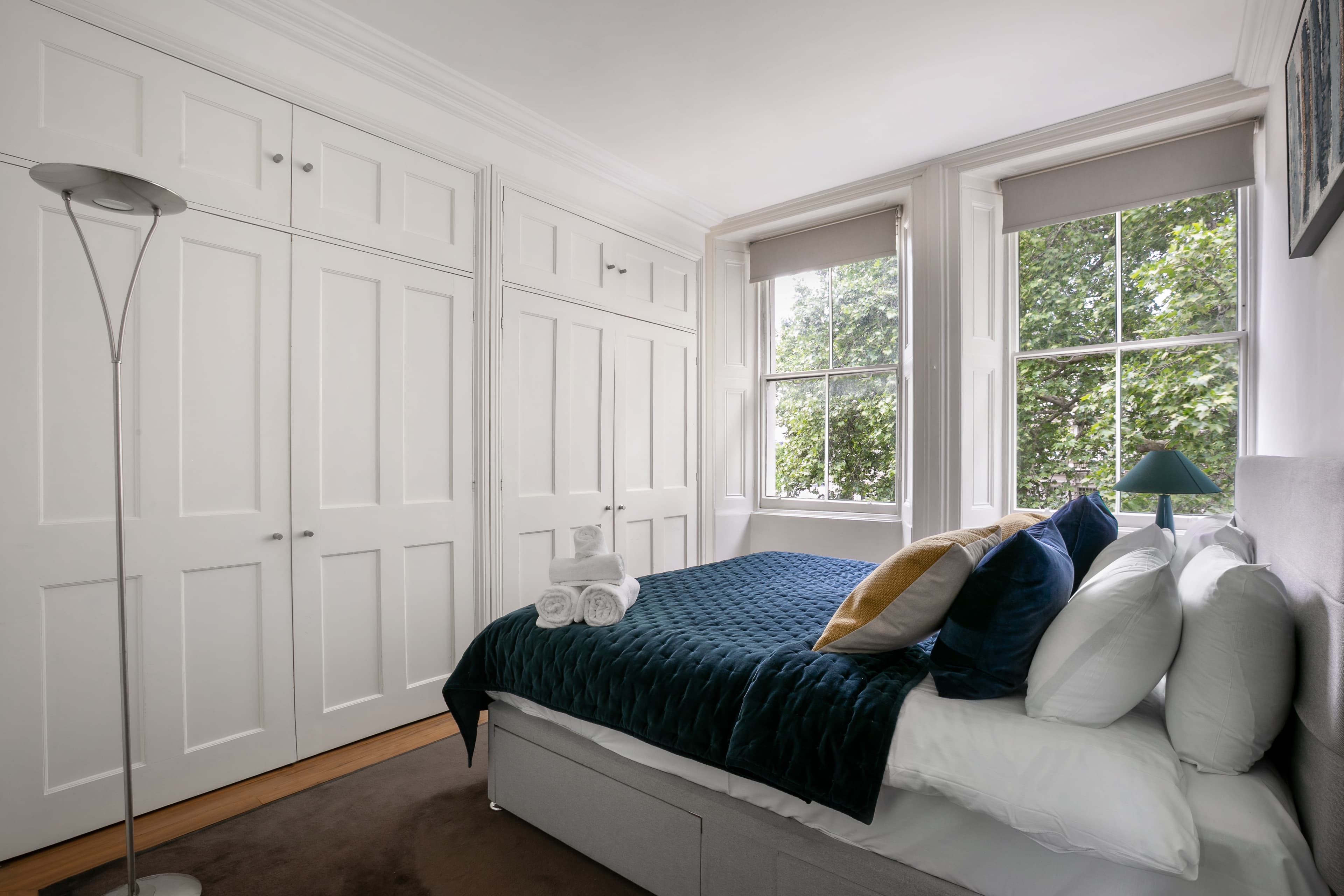
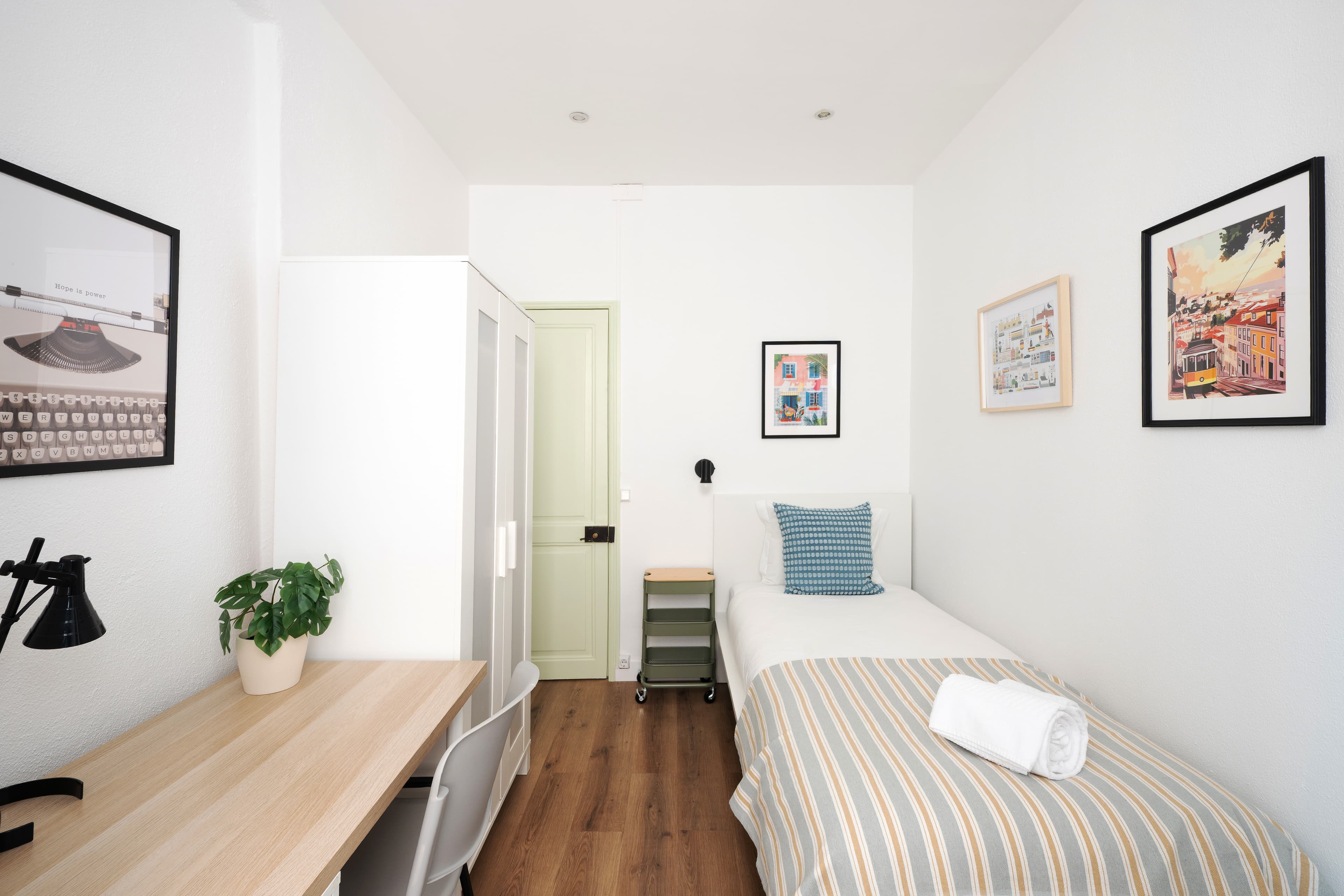
A small flat has no two metres. The work turns into a search for the single position from which the room reads as a room at all. Where the wall behind me is far enough away, where the doorway does not eat the frame, where the tripod physically fits between the bed and the wardrobe without standing in the shot. In a studio in Alfama I have spent longer finding one angle than I would spend photographing an entire floor of a villa in Cascais.
A client I photographed in Bica told me why he was looking for a new photographer at all. In the previous photographs his apartment looked considerably larger than it is. Guests saw the space, arrived, walked into the room, and what they felt was not delight but disappointment. It reached the reviews.
This runs against the instinct: a lens that is too wide inflates a room, and a small Portuguese flat photographed that way becomes enormous. But flats in these neighbourhoods are small by nature, and that is exactly their appeal. They are compact and authentic. The job is not to lie about the size. The job is to make a small room look like somewhere a person would want to stay.
The work does not shrink with the floor area. Quite often it grows.
In Lisbon the price is often set by the size of the property. A shoot of a flat up to T3 can be found for 99 euros, and that is a fair price for what it contains: a short scheduled visit, a fixed number of frames, template processing done at volume. If what you need is images for the listing and nothing beyond that, take it. It works.
I price differently, because in my experience square metres are the worst possible predictor of how long the work takes. The price here is for the work, not for the floor area.
What "processing" actually means
You will often hear a photographer say that they shoot in HDR, or that the photographs go through HDR processing.
Everyone advertises HDR. Almost nobody says what they mean by it, so the word has stopped carrying information.
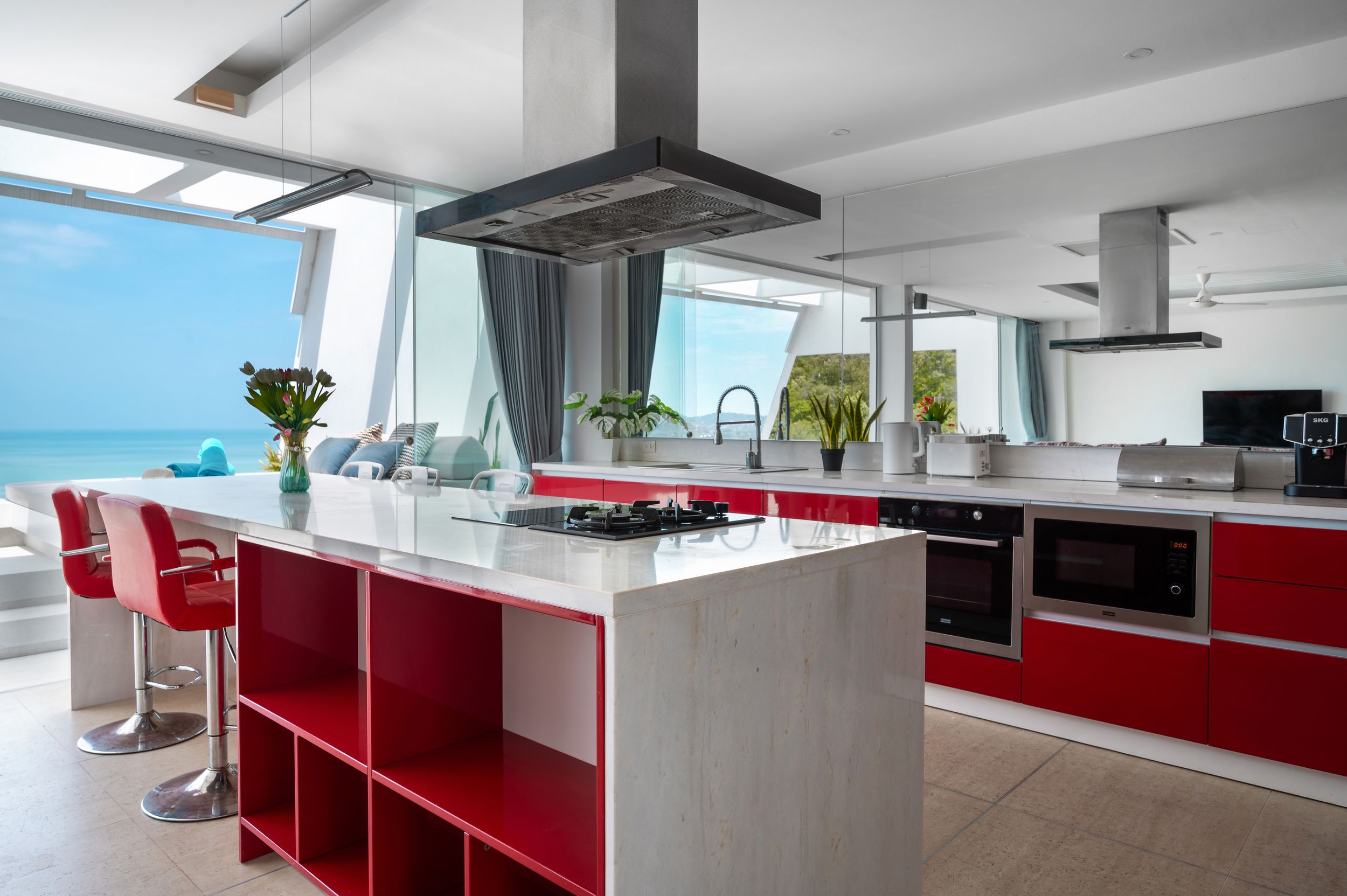
HDR is the technique that lets a photograph hold both the inside of a room and whatever is visible through the window. Without it you choose: a correctly lit room with a white rectangle where the view should be, or a visible view with a dark room around it. It is a merge of several frames into one. Run automatically, that merge produces a very particular look. Flat, slightly glowing, everything equally present. Technically it is right. It reads as processed, and most people can tell, even if they could not tell you what is wrong.
I do the same thing by hand, shooting five frames for every angle. It is the same technique; the difference is that I decide which elements matter and how present each one should be, rather than letting the software give everything equal weight. That selection is the whole job, and it is what makes the result feel like a room rather than a rendering.
The rest of the work is unglamorous and specific: straightening the walls that a wide lens bends, correcting white balance so that white things are white, killing the reflections that bright interiors throw onto walls, cleaning surfaces and scratches, putting something on the black television screen and removing its reflection, and, when the sky behind the window is a grey nothing, replacing it.
That list is worth having because it gives you something to check when the files arrive. "High quality" is not checkable. "The verticals are straight and the window is not blown out" is.
A word on the line, because the list above does not explain it. Replacing the sky outside a window, lighting a fire in the fireplace, removing a scratch on a wall: that is presentation, the property on its best day. The size of a room, its proportions, how many windows it has, the condition of the furniture, those are not treated that way. The rule is simple. When the guest walks in, they should recognise the room, not be surprised by it. Anything that breaks that recognition I do not do, even when asked.
Where AI stops
AI has become genuinely good at this, and I use what helps. But there is a line, and it is worth being precise about where it falls rather than pretending it does not exist.
What AI produces does not hold up at detail level. Enlarge it and the fabricated parts show: surfaces that dissolve, edges that were invented, texture that is smeared rather than resolved. I finish files to a standard that can be printed on a billboard, with surfaces and details cleaned by hand rather than generated.
The usual objection is fair and I have heard it many times: we are never going to print this on a billboard, and nobody is going to zoom in that far. True. Nobody will.
But it is still visible, and more importantly, it is still felt. An inexperienced viewer may not see what is wrong with the image. They will feel it.
That is the same mechanism as the automatic HDR above. Nobody scrolling listings on a phone stops to analyse tone mapping. They simply move on from one listing and linger on another, and afterwards they could not tell you why. That reaction is what you are buying, and it is not produced by a tool that is right at a hundred percent scale and wrong at four hundred.
Lisbon rooms, specifically
Everything so far applies anywhere. What follows is about Lisbon specifically.
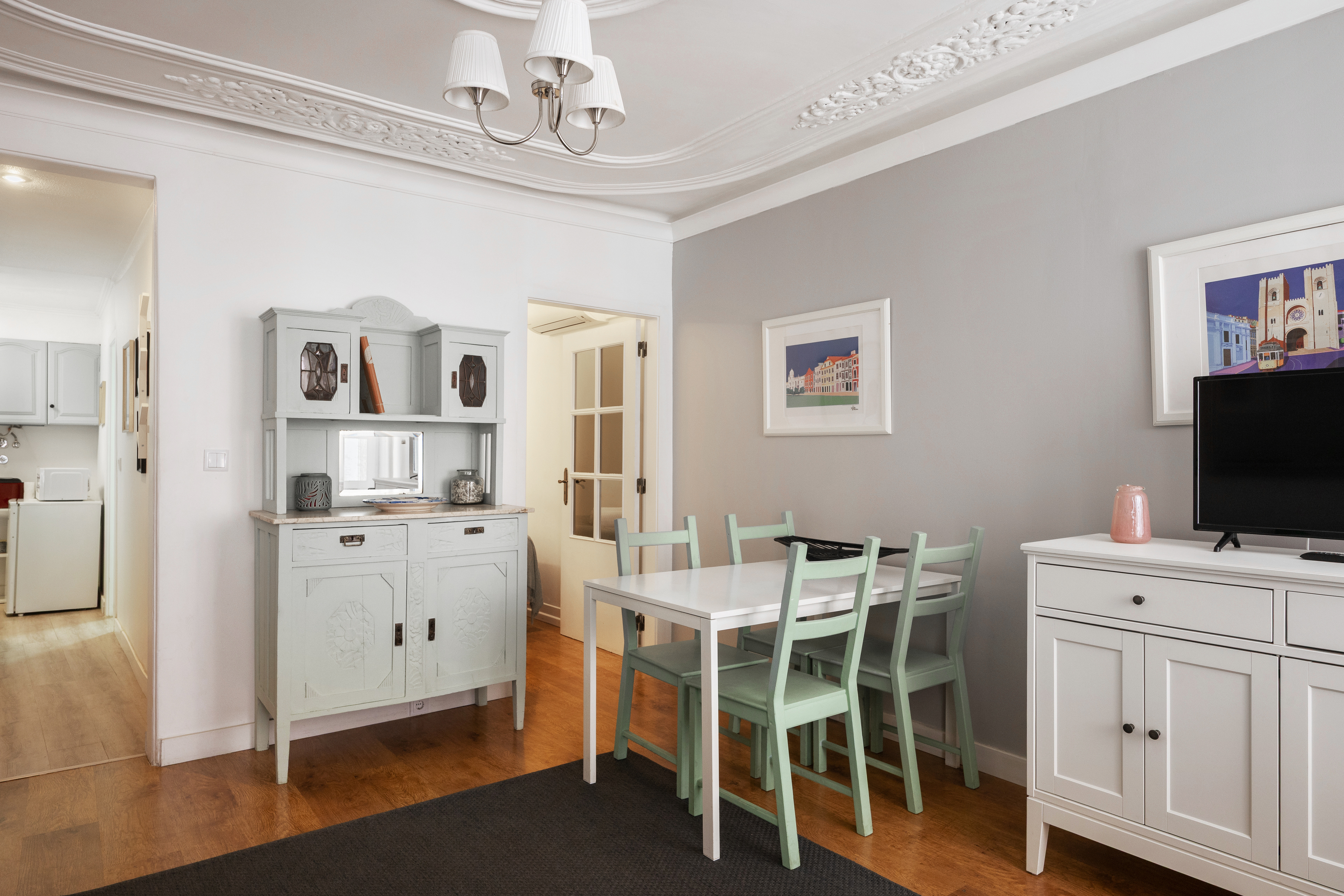
Lisbon flats are narrow and deep, with windows at one end and a lot of room behind them that gets no direct light. The buildings are old and the floors are rarely level, which shows immediately in a photograph as walls that lean. Tiles and varnished wood throw reflections that a bright flash makes worse. And the light outside is strong enough, most of the year, that the gap between the inside of the room and the street beyond the window is wider here than in most European cities. That gap is exactly what HDR exists to close.
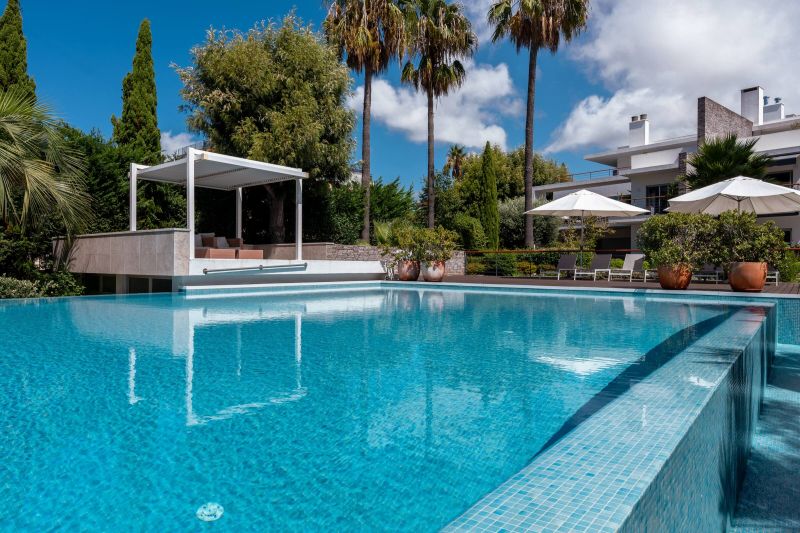
Most of my earlier work was in luxury villas: wide terraces, enormous private infinity pools, space that presents itself. Lisbon meant relearning the craft for the opposite problem. A Pombaline flat and a villa with a pool are not the same job with different furniture.
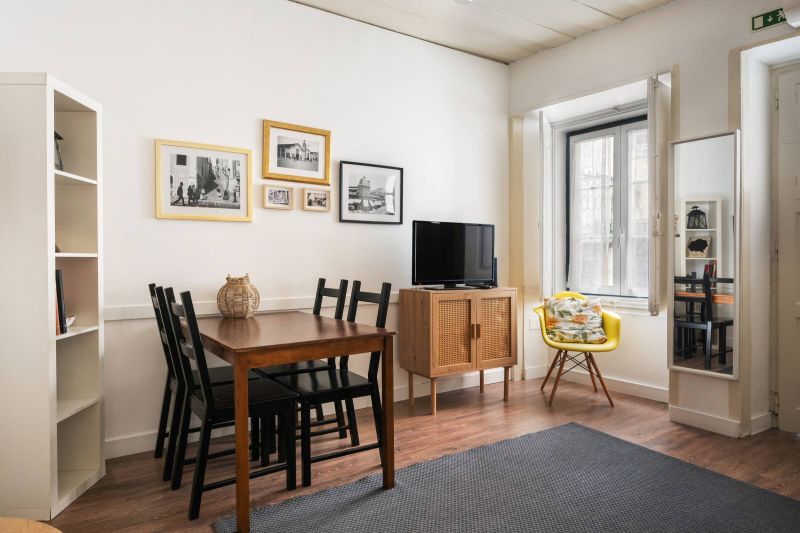
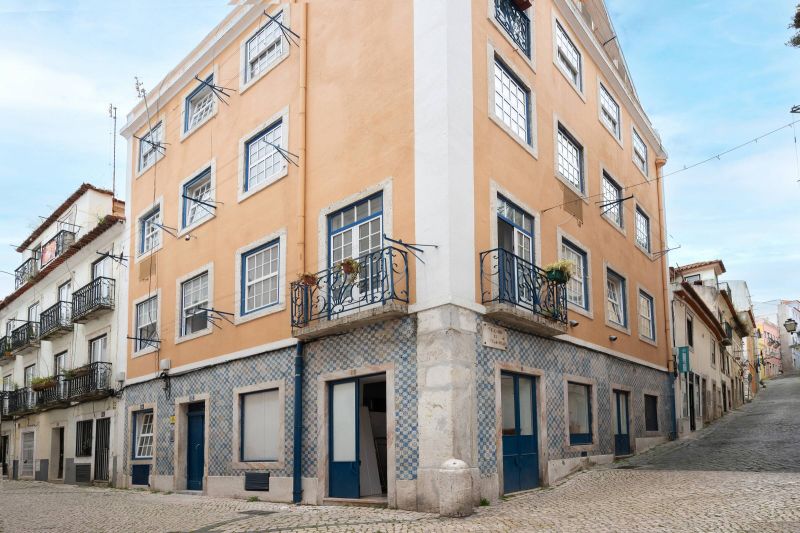
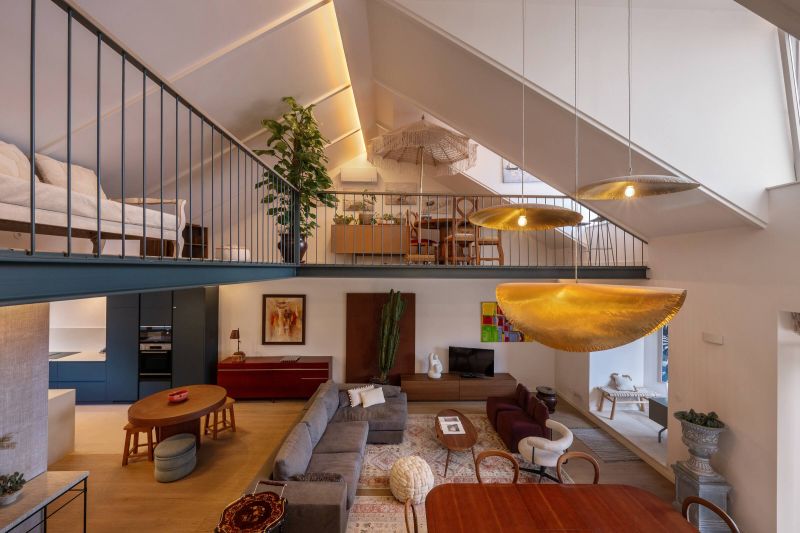
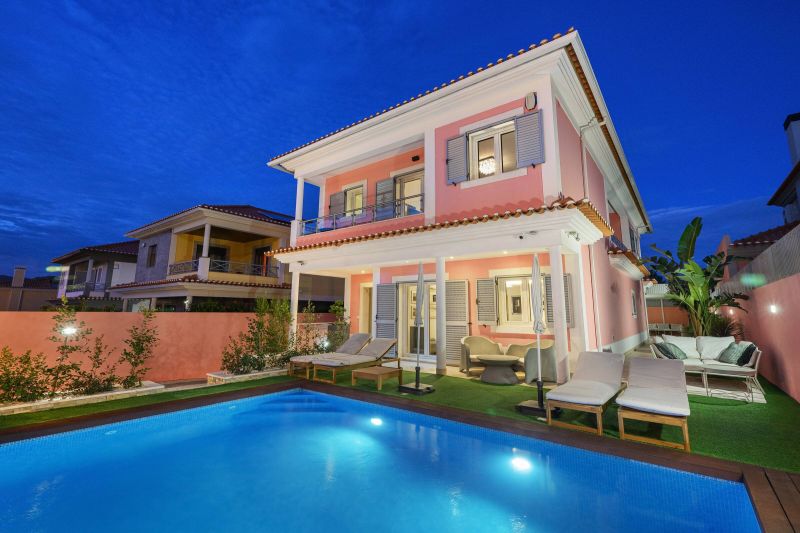
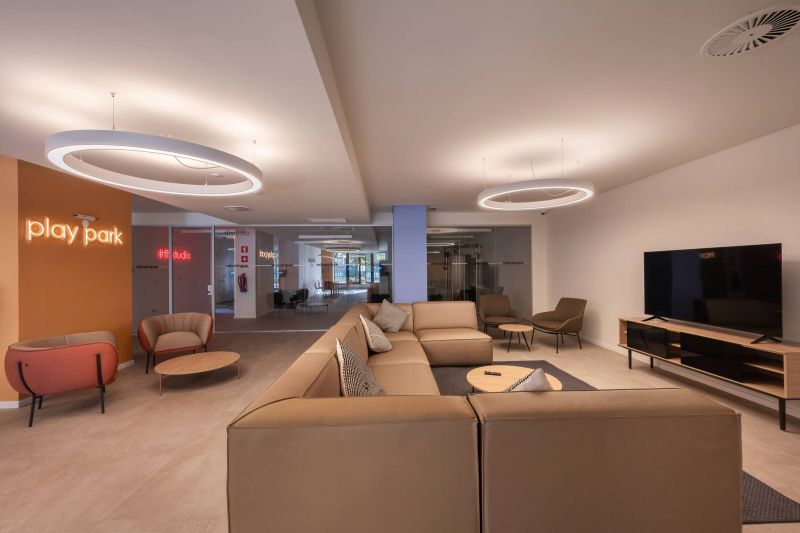
You can see the property work I have published in the portfolio and the individual shoots. The Lisbon-area shoots are there now as well: two buildings of rental rooms in Bica and Madragoa, restored townhouses in Paço de Arcos, two houses in Cascais and a student residence in Areeiro.
What it costs
No enquiry form required to find out. My rate for a property shoot in Lisbon starts at 250 euros. That covers a shooting day and 20 fully processed photographs. Outside Lisbon the price is higher, and travel is added on top.
Two packages:
- Basic: a full shooting day and 20 fully processed photographs.
- Extended: a full shooting day and 40 processed photographs.
- Additional retouched photographs beyond the package, priced per photo.
Current prices and what each package includes are on the real estate rates page. The working method is the same in both cases: I shoot, you receive everything unedited within a few days, you choose what gets processed, and the finished files follow. If you want to know why that last stage is measured in weeks rather than days, I wrote about that separately in why photographers take so long to deliver photos.
Booking is held with a 10–20% prepayment. Everything else, what I do and how, is on the real estate and interior page.
In short
Professional photographs of a rental do measurably increase demand, by less than the industry advertises: around nine per cent of occupancy on average across the sample. And all of that effect came from the photographs themselves, not from a platform badge. It is specific and it breaks down into things you can name: the right rooms, shown from positions that make them readable, finished so that nothing about the image draws attention to itself.
If your flat is small, that is not a reason to expect a discount. It is usually a reason the photographs matter more, because a small room photographed badly looks smaller, and a small room photographed properly looks like somewhere a person would want to wake up.
I shoot in Lisbon and across Portugal. More about my work: photographer in Lisbon.