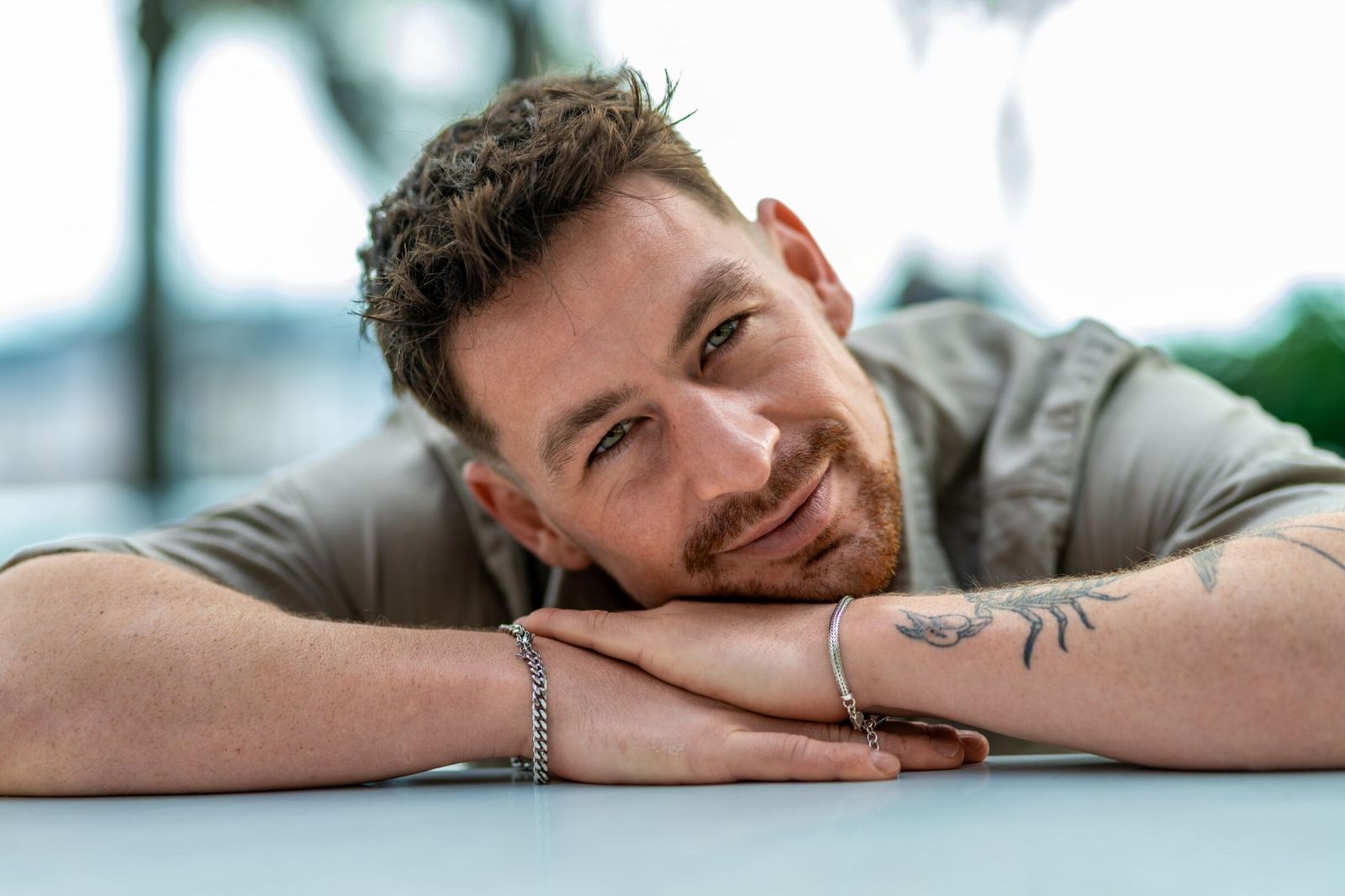
How to Build a Dating Profile Photo Set in Lisbon
Date of publication: 10 Sep 2026If you're in Lisbon or planning to come, you've got something people shooting in their home town don't: a background that changes every 200 metres. That does more for a profile than any camera.
Research has shown that an impression of a face forms faster than a person can notice it. In 2006 Willis and Todorov showed participants unfamiliar faces for 100 milliseconds, and that was enough to rate attractiveness, likeability and trustworthiness. A longer look barely changed the rating, it only made people more confident in it. So the first photo weighs more than all the others together. In the app you see one frame first, and that frame decides whether the profile gets opened or swiped past, before anyone has really looked at it.
But one good frame isn't enough. A profile is read as a set, and 5 similar photos lose to 4 different ones.
A set with 4 jobs
Whether it's Tinder, Bumble or Hinge, a profile needs 4 to 6 photos. Fewer doesn't add up to an impression. People scroll further only once they're interested and want to know more, but 4 to 6 is the baseline. A single photo is suspicious on its own.
And each photo is responsible for something of its own, so these first few have to answer 4 questions:
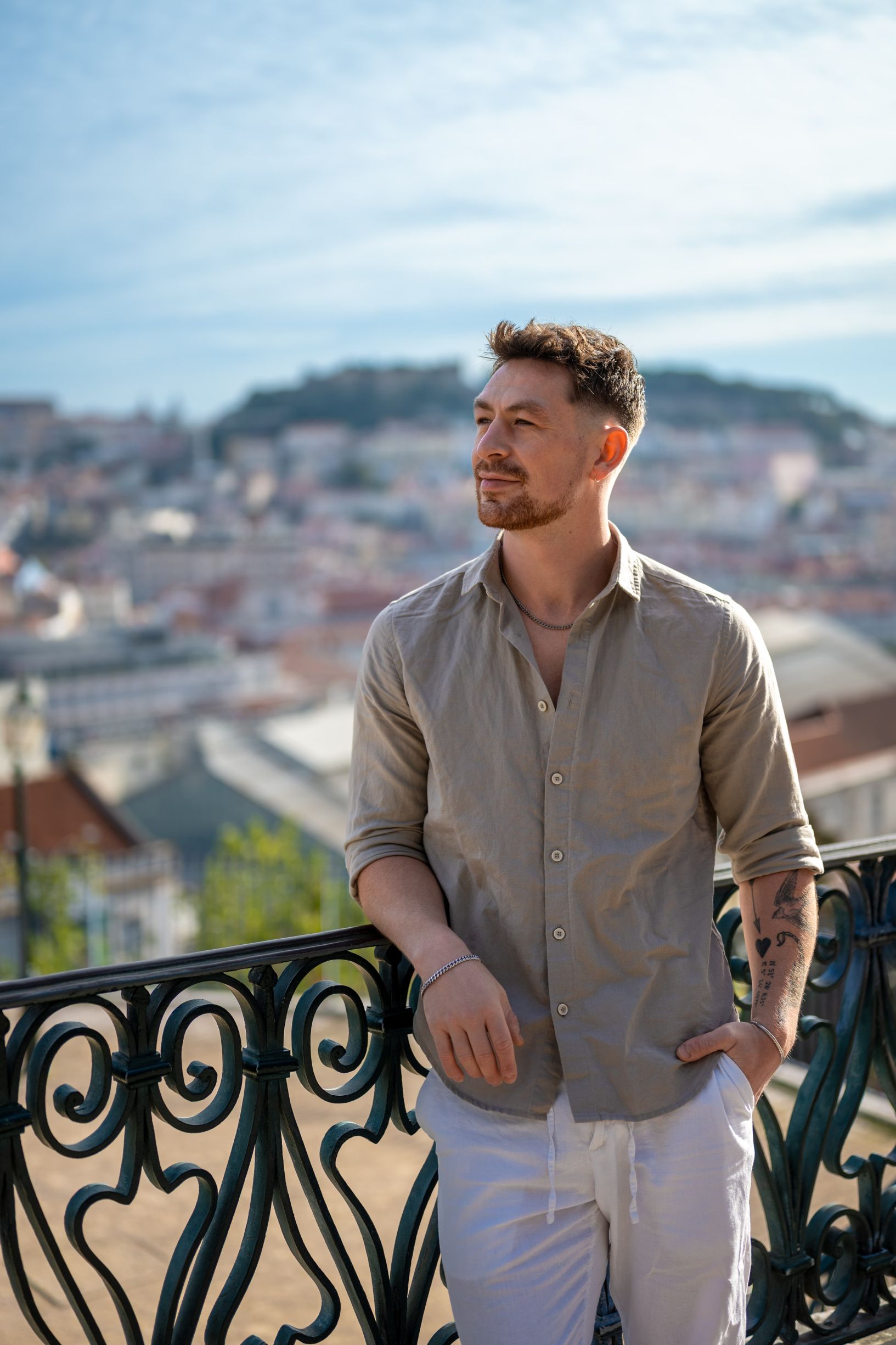
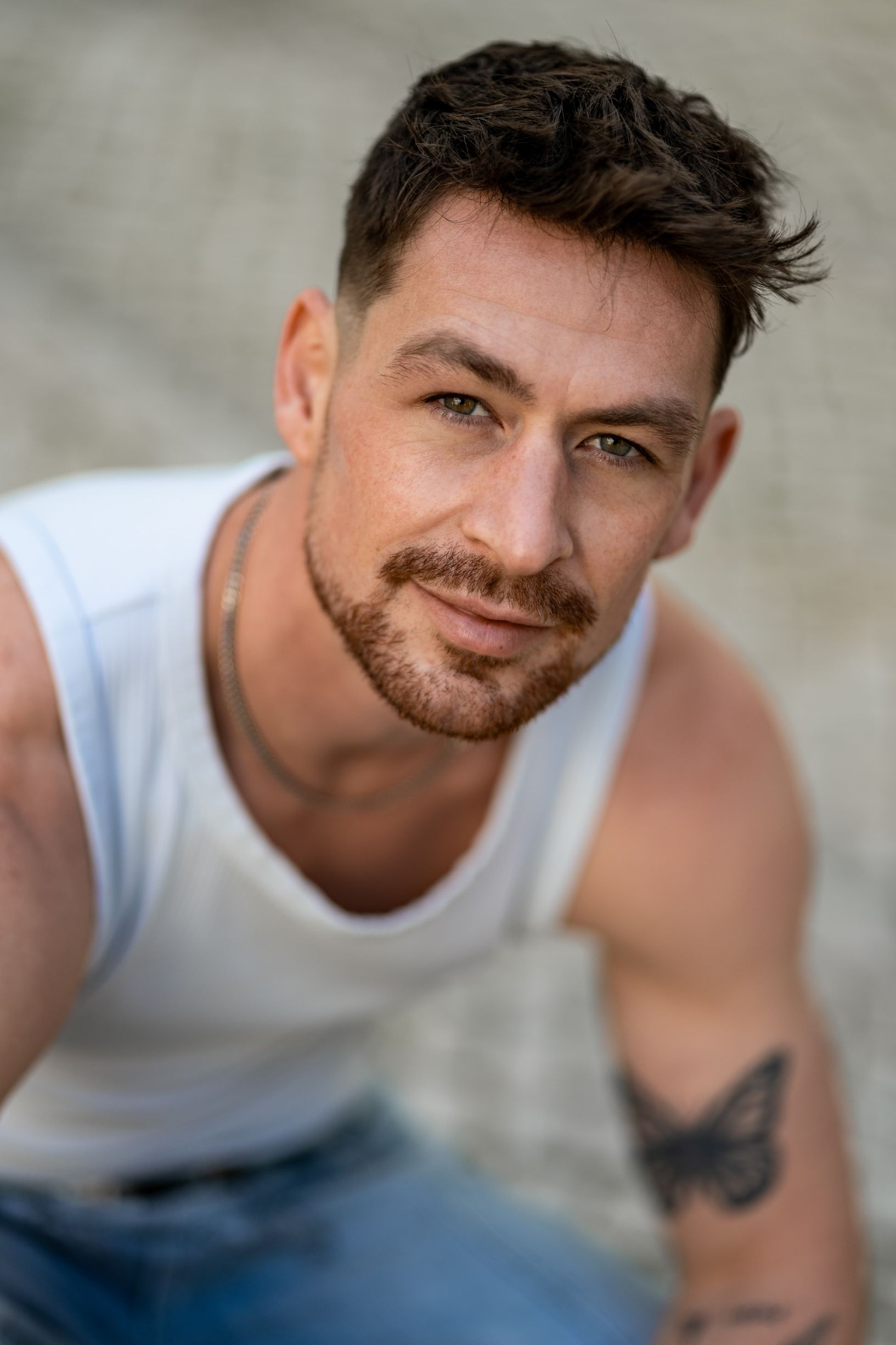
- The face. Close enough to see the features, far enough to see the shoulders. A face filling the whole frame isn't a portrait any more, it's an ID photo.
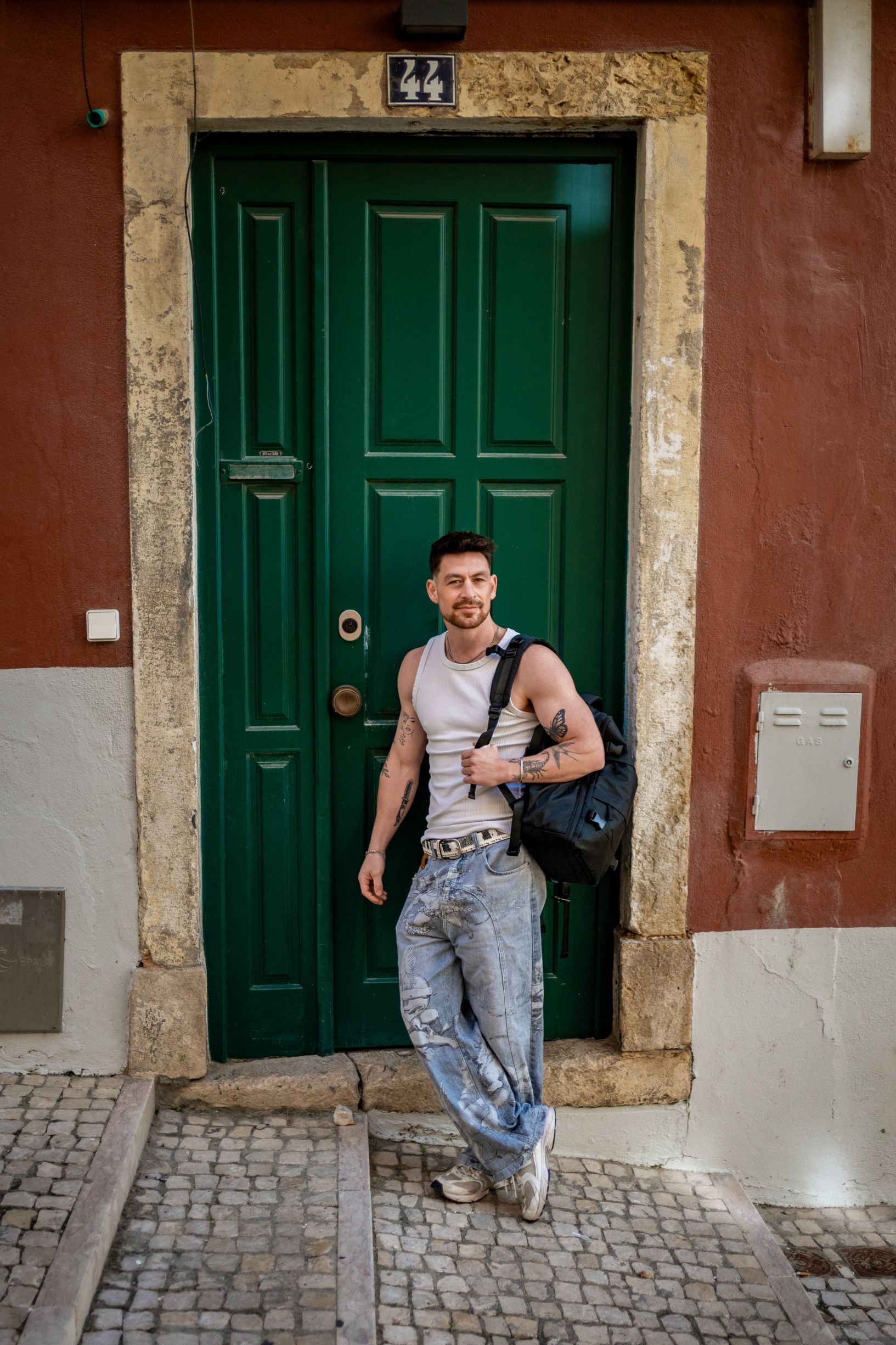
- Full length. One frame where all of you is visible. If it's missing, people notice and think exactly one thing: this person is hiding something.
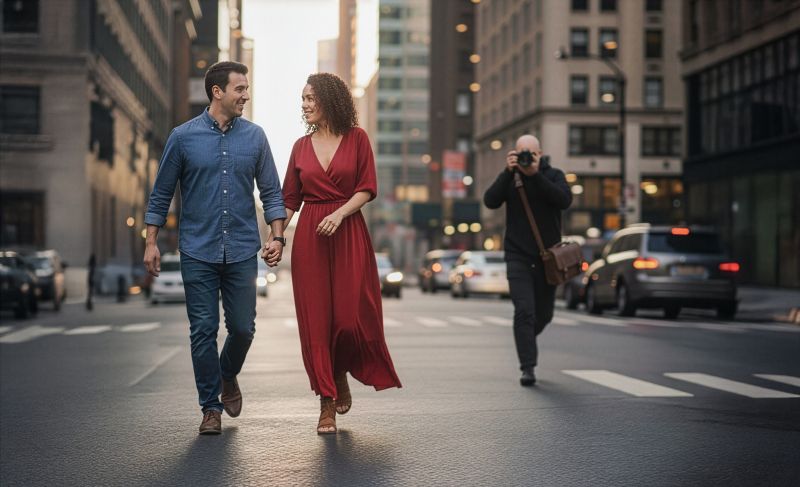
- Doing something. A frame where you're doing, not standing. Coffee, a walk, a street you actually use.
- A reason to write. A frame with a detail the eye can catch on: a dog, a guitar, a recognisable street, an odd thing in your hands.
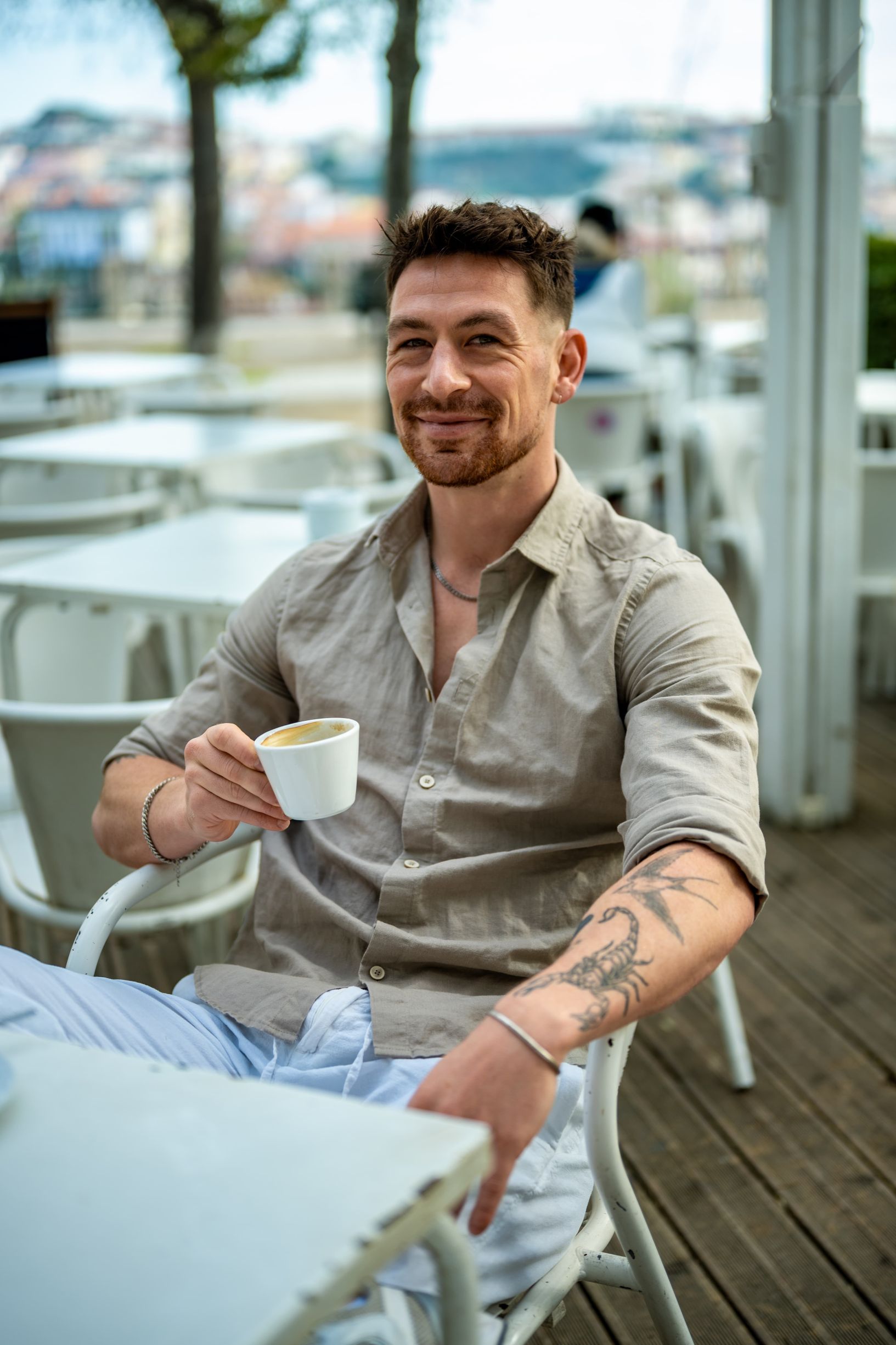
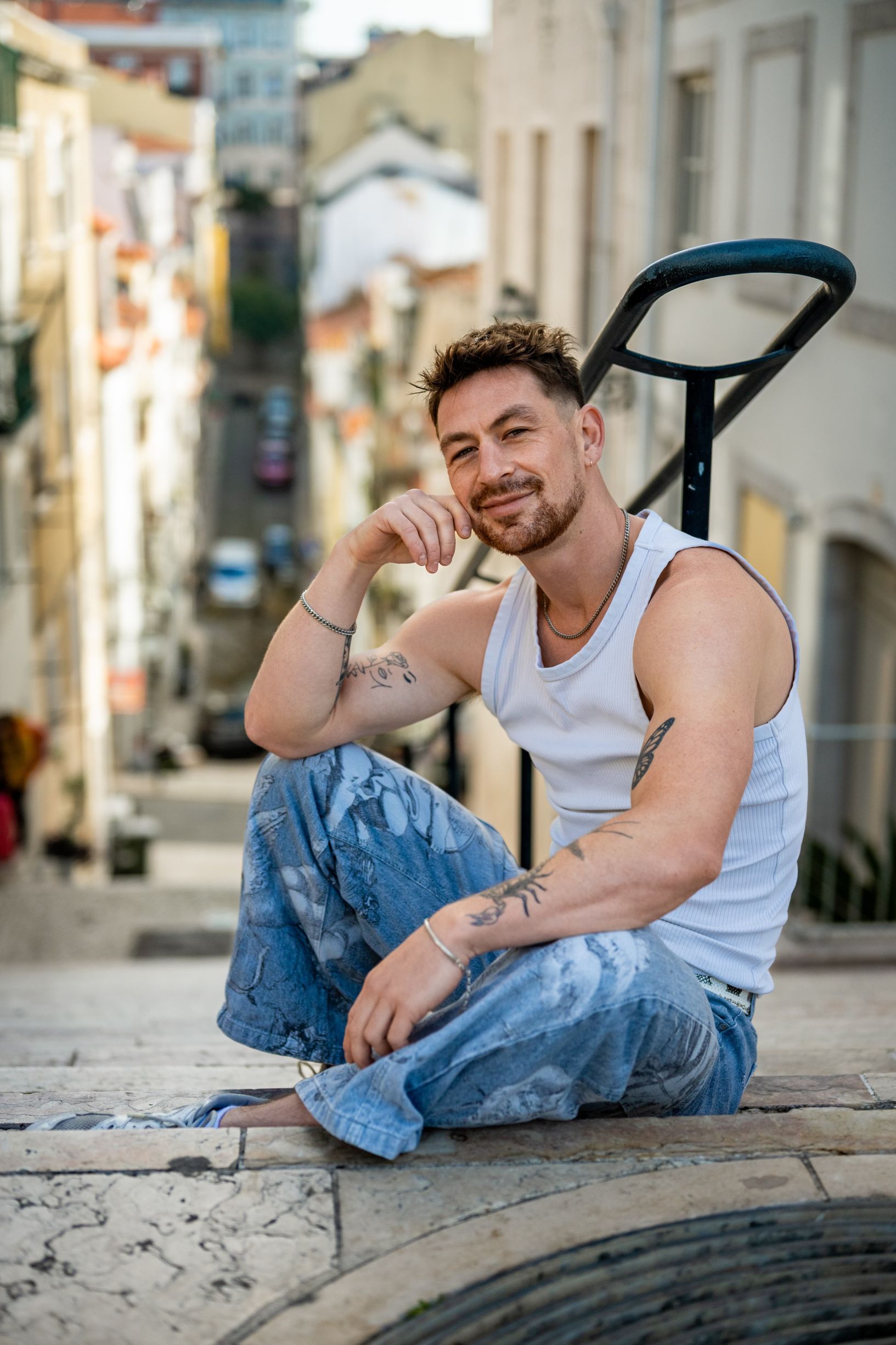
The last one is underrated most often, and the difference it makes is simple. If there's nothing in the frame but you, the other person is left with "hi". If there's a detail, they write "is that Alfama?". A match without a conversation is worth nothing, and this is the frame that turns one into the other.
In Lisbon that detail comes for free. A tiled wall, a yellow facade with laundry on the balcony, a green door, a tram leaning into a bend. What you'd pay a set designer for in another city is just standing in the street here.
One more thing, because it gets mixed up all the time. 4 to 6 is how many photos go into the profile, not how many need to be taken. The shoot is always bigger, for a simple reason: a person needs time to stop thinking about the camera. Frames from the start of a shoot rarely make the profile, but without them there'd be no frames that do. More on that in a separate piece: why 1 hour is the sensible minimum.
What ruins a set
The most common mistake is a group photo first. You're making someone look for you among your friends when they wanted to look at you. According to Hinge data quoted by CBC, a solo photo gets 69% more likes than a group one.
Selfies are more complicated. The same data puts them at 40% fewer likes, and bathroom selfies at 90% fewer. One well-placed selfie hurts nobody. The problem starts when the whole profile is selfies: then it says there was nobody around to take your picture.
Crossed arms are something people rarely notice in themselves, and always notice in a frame. It reads as closed off, sometimes as aggressive, and it spoils the impression at that same first glance.
Then there are photos the app simply won't let through. The rules on Tinder, Bumble and Hinge differ: Bumble, for example, bans shirtless and underwear photos taken indoors in front of a mirror. That's moderation, not advice on taste.
Why a studio portrait doesn't fit
The 2 best-known photographers in the world who shoot for dating sites agree on this: Eddie Hernandez and the team at The Match Artist. Both say the same thing: a portrait that looks like it came from a studio doesn't belong in a dating profile.
It's not about quality. A frame like that looks like a photo for a company website, and the person in it looks like an employee, not someone you'd want to spend a Sunday with.
Too professional. That's how my own client, Boy Dekker (@therealboydee), a dating coach himself, described the photos in this article a year after the shoot. On Instagram they drew so much attention that people asked whether they were AI. On the apps they didn't work: too obviously a shoot. Why exactly, he says honestly he doesn't know. But one thing he did notice: after a match, people go and look at your Instagram, and there those same frames impress. Hence the two sets: the phone to get you to the match, the camera for the moment your profile has already been opened.
So the shoot has to be outdoors, in colour, in a city that has something to add to the frame. Colour isn't decoration: the eye stays longer on a bright patch than on a perfectly neutral background.
And the thing men usually don't think about. A woman looks at a photo with more than one question, "attractive?". The second question is "safe?". An open posture, daylight, a busy place and visible eyes answer it better than any flattering angle.
Where and when to shoot in Lisbon
In Lisbon a lot depends on the hour. Alfama has to be done before 9: by 9 or 9:30 the narrow streets fill up so much that photographing one person becomes impossible. Midday, against the usual rule, works too: the high walls in Baixa and Alfama throw deep, graphic shadows. And the sunset here is long, an hour or an hour and a half, enough time to change location. I've written two separate pieces on this: the best time for a photoshoot in Lisbon and how to shoot in Alfama without the crowds.
What we pick in practice. A viewpoint for the frame with the city behind you. Bairro Alto and Príncipe Real for colour, doors and walls. A café table for that "doing something" frame. A park if you want something calmer and greener. One neighbourhood is enough: we walk it, we don't drive between 5 of them.
If you're only here for a few days, that's even simpler: we pick one free morning and that's it. What to wear I've covered separately, but in short: 2 or 3 outfits you already feel like yourself in.
5 things I'm sure of after 19 years of shooting
We're bad judges of our own photos
You and I are bad judges of our own photographs. People almost always pick the frame where they like themselves, not the one where they look like themselves. Those are different frames, and the profile needs the second one. The reason is simple: we're used to ourselves in the mirror, and the mirror shows us almost always from the front. Friends and family see us from different sides and perceive us differently. So when choosing photos I'd ask one of them for an opinion, rather than relying only on yourself.
A friend with a phone
The apps often want exactly that, ordinary phone photos. It seems anyone can take them, and a friend with a phone really can help. But there's a catch, and it isn't the camera: a modern phone shoots decently. It's that your friend came out to take a walk with you, not to work through 20 takes of one frame. That's normal, it's just a different job.
So on a dating shoot I take part of the frames straight on a phone. You get 2 sets for one price: photos from a professional camera and, as a separate block, photos from a phone. Light, composition, posture and getting a person to relax are the same in both sets. Only the device differs.
The obvious question: why pay for phone photos? Because the phone isn't the point. Where to stand, where the light falls, what to do with your hands and how to stop focusing so hard on how you look: that's what you're paying for, and a friend with a phone has none of it. The phone only removes the one thing the apps punish: the look of a shoot. I shoot on my own phone and pick the frames myself, so you get a finished set, not 1500 near-identical files to sort through.
The price of a photoshoot in Lisbon is public: you can see it on the page with all the packages and terms.
Not all frames from one shoot
Not every photo in a profile should come from the same shoot. I'm saying this against my own interest: a set built entirely from one session shows. Mix them, and the profile starts looking like a life instead of a portfolio. Use photos you already have: maybe not the best ones, but ones that show you from different sides. Photos with animals are said to do especially well.
Where retouching stops
Retouching has a limit, and it's a simple one. The word is often taken to mean skin smoothed to plastic or a heavily reshaped body. That's just bad retouching: good retouching can't be seen. Temporary things can go: a spot that will clear in a week, stray rubbish in the frame. Permanent things stay as they are: the shape of the face, the figure, the age. The reason is purely practical. The person who turns up to a date because of your photos sees you in the first seconds. If you look different in the pictures, they notice at once, and the disappointment lands on you, not on the photographer.
Being photogenic
And the last one, purely my own observation. It seems to me that being photogenic is less a technique than a reason. People come out well in my photos more often where they have a reason to be. So I'd rather walk you down a familiar street than stand you in an empty studio. I won't insist, colleagues reach other conclusions.
What's known about this, beyond photographers' opinions
1966. 752 students filled in a questionnaire and were told a computer would match them. In fact the pairs were made at random. The only thing that predicted wanting a second date was looks, rated in advance by independent judges. Neither intelligence nor the personality traits from the questionnaire made any difference. That was 50 years before the first app.
2025. A study with 445 participants showed the same: the photo outweighed all the other profile data. But there's a detail. AI-generated faces were used, and the criticism is that this may have inflated the weight of looks: such faces lack the small quirks and warmth of a real one. A study that supposedly proves looks win is criticised for its faces not being real. I don't know a better argument against AI photos in a profile.
Smiling is a story of its own. In 2010 OkCupid published a finding that it's better not to smile and not to look at the camera. The advice is still doing the rounds. A later check on a sample of the same size found no significant difference.
The most telling part is something else. Several attempts were made to build dating apps with no photos at all: faces hidden, or revealed gradually as the chat went on. S'More closed after being acquired in 2023. Jigsaw dropped the format in 2024 and turned into an organiser of in-person events. The photo doesn't decide everything. But without it, the conversation never starts.
How it goes with me
In Lisbon it takes 1 to 2 hours. We agree on a neighbourhood, get a coffee and go for a walk.
I'm not a silent photographer. The opposite: I talk almost the whole time, because that's how a person stops focusing so hard on how they look. I tell you where to stand, what to do with your hands, what to do next. All of that work is there for exactly one reason: so the finished frame doesn't show that anyone told you anything.
From here it's simple: dating profile photoshoot in Lisbon, with the terms and booking on the same page. If it's not dating photos you need but portraits more broadly, see men's portraits or women's portraits. Prices for every format are collected here.
I shoot in Lisbon and across Portugal. More about my work: photographer in Lisbon.