2026 Guide: Lisbon Photography Permits. Local Rules for Professional Shoots
Date of publication: 24 Apr 2025 | Updated: 09 Jan 2026Lisbon is a photographer's dream city because it is full of history, texture, and golden light. From the narrow, private corners of Alfama to the open riverside views of Belém, the city offers many beautiful places for portraits, travel photography, couples sessions, editorials, and commercial work. But in 2026, it is still important to understand the difference between a quiet personal shoot and a professional production. Some locations are simple if you work discreetly with a handheld camera. Others, especially monuments, museums, managed heritage sites, and drone locations, require extra caution and sometimes formal permission.
This guide explains the practical difference between photos taken for yourself and professional or organized shoots in Lisbon, then goes through popular locations one by one. It is not legal advice. Rules, fees, and internal policies can change, so always check the official websites before planning a professional shoot.
Content
Photos Taken for Yourself vs Professional or Organized Shoots
For this guide, the important difference is not only whether money changes hands. The practical question is what the shoot looks like on location and what the images will be used for. A person taking photos for personal memories is usually treated differently from a photographer directing clients, working for a brand, using visible equipment, or creating images for business use. Different institutions may use different wording, so this article uses practical categories rather than pretending that one simple definition works everywhere.
A key point: if you are a professional photographer photographing someone else as a client, model, brand, couple, or family, it should not automatically be treated as simple personal photography just because the equipment is small or the session is short. It may still be professional use, and some monuments, museums, gardens, palaces, and managed sites can require permission even when the session feels quiet.
Photos Taken for Yourself
This means ordinary personal photography: photos you take for your own memories, your trip, your partner, your family, or your private social media. It normally means that you are acting like a visitor, not running a professional session. In this article, this category usually means:
- Taking photos of yourself, your partner, your family, or friends while visiting the city
- Using a handheld camera or phone, without tripods, light stands, large reflectors, flashes, props, or production equipment
- Moving naturally through the location without directing a visible photo session for clients
- Not blocking streets, entrances, stairs, viewpoints, doors, shopfronts, or pedestrian flow
- Respecting residents, tourists, security staff, shops, restaurants, private doors, and religious or heritage spaces
- Using the images for private memories or personal social media, not for advertising, paid promotion, brand campaigns, professional portfolios, or client delivery
- Accepting that some managed sites may still restrict photography inside buildings, monuments, museums, palaces, churches, or paid-access areas
Professional or Organized Shoots
This means photography that has a professional, client-based, promotional, editorial, commercial, portfolio, or production purpose. It does not always need to look like a large film crew. A small directed session can still be treated as professional use if there is a photographer, a client, a model, formal posing, visible direction, or later use connected to business or promotion. In this guide, this category often includes:
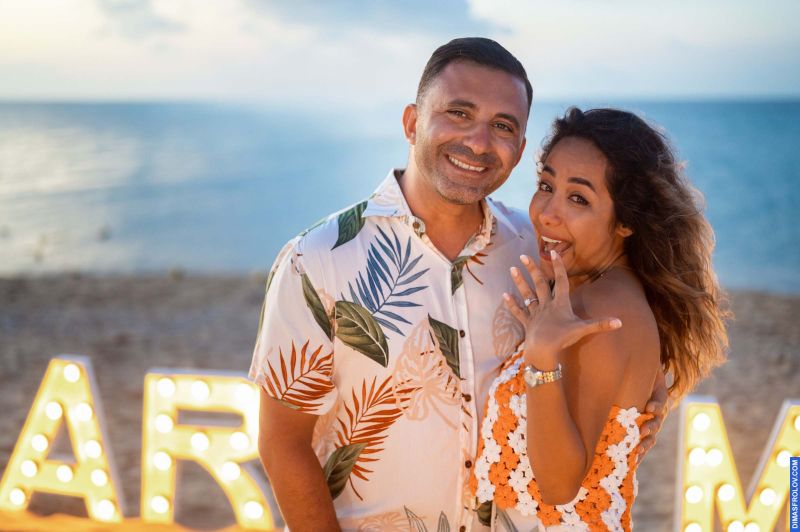
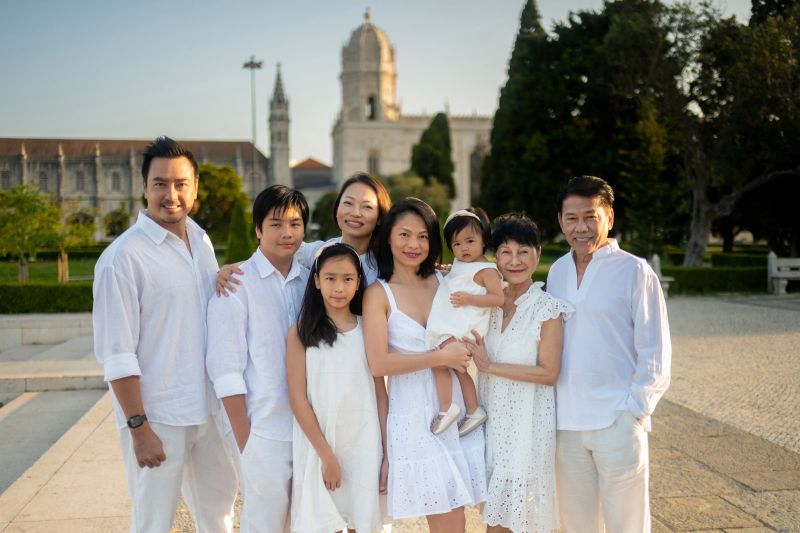
- Photographing paying clients, models, couples, families, influencers, artists, companies, hotels, restaurants, products, or services
- Creating images for a business, brand, advertisement, campaign, publication, website, social media promotion, portfolio, or press use
- Using tripods, reflectors, light stands, flashes, props, rails, monitors, microphones, drone equipment, or anything that occupies public space
- Working with assistants, stylists, make-up artists, videographers, producers, or a visible crew
- Directing poses, repeated takes, outfit changes, formal clothing, wedding-style looks, fashion concepts, or staged scenes in a public or managed location
- Staying in one place long enough to affect visitor flow, pedestrian movement, entrances, viewpoints, stairs, doors, shopfronts, or normal public use
- Shooting in monuments, museums, palaces, gardens, rooftops, hotels, restaurants, cultural venues, or private businesses where the site may have its own rules
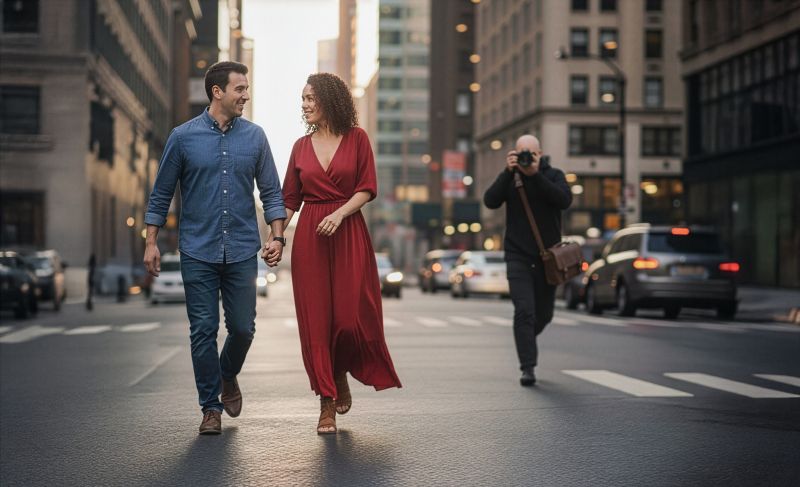
In simple terms: a visitor taking photos for personal memories is one thing. A photographer conducting a session for someone else is another thing, even if the session is small, quiet, and done with one handheld camera.
"The definition of commercial photography can vary a lot from country to country. Sometimes, just using a tripod, a light stand, or a visible setup is enough for your shoot to be treated as a production and require permission. It is always smarter to check the local rules in advance. Even a short article like this one can save you a lot of trouble."
Dimas Frolov, Photographer in Lisbon
2026 Update: Photography Permits in Lisbon and Sintra
In 2026, the general rule remains simple: a quiet handheld personal shoot is usually low-risk, while a professional production may need authorization. Lisbon public spaces are mainly handled through the Lisboa Film Commission. Sintra heritage sites such as Pena Palace and Monserrate are managed by Parques de Sintra. Quinta da Regaleira is managed separately by Fundação Cultursintra and has different rules.
According to the official Lisbon licensing information, image capture for private purposes that is not used commercially may be exempt if it does not conflict with public space occupation. However, the moment a session involves occupation of public space, equipment, reserved area, traffic impact, or a visible production setup, licensing or prior communication may be required.
- Lisbon public spaces: handheld personal photography is usually the safest category.
- Professional productions: check with Lisboa Film Commission before the shoot.
- Small setups can still matter: a tripod, reflector, flash stand, or crew can change how the shoot is treated.
- Managed locations: museums, monuments, palaces, rooftops, hotels, shops, restaurants, and cultural sites can have their own rules.
- Drone use: drone rules are separate from normal photography rules and must be checked independently.
- Sintra monuments: do not assume that a public ticket gives permission for a professional client shoot.
- Official sources first: always verify current rules and fees on the relevant official website before confirming a location with a client.
Lisbon Photography Locations: Permit Rules, Drone Use & Pro Tips
📍 Belém Tower (Torre de Belém)
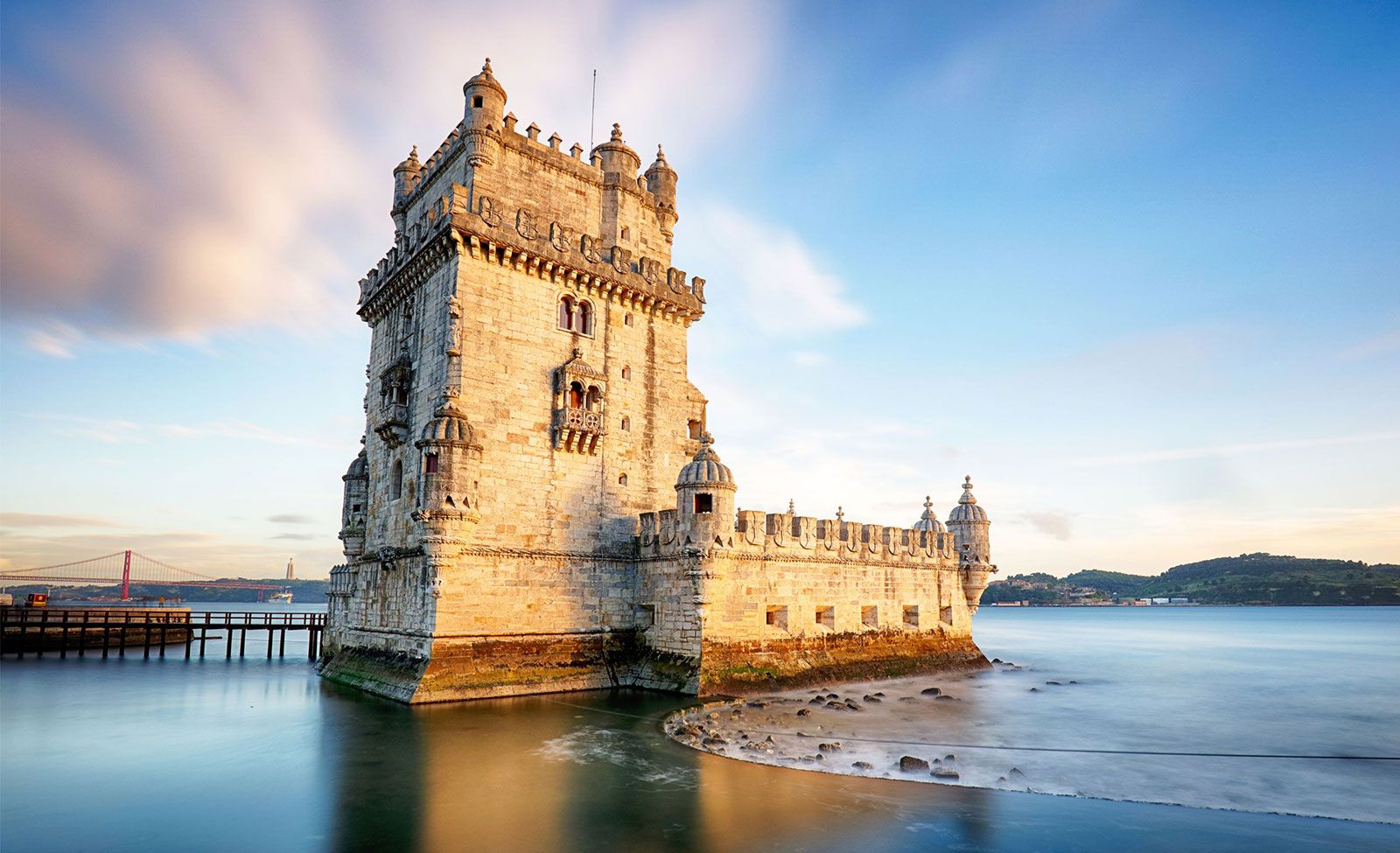
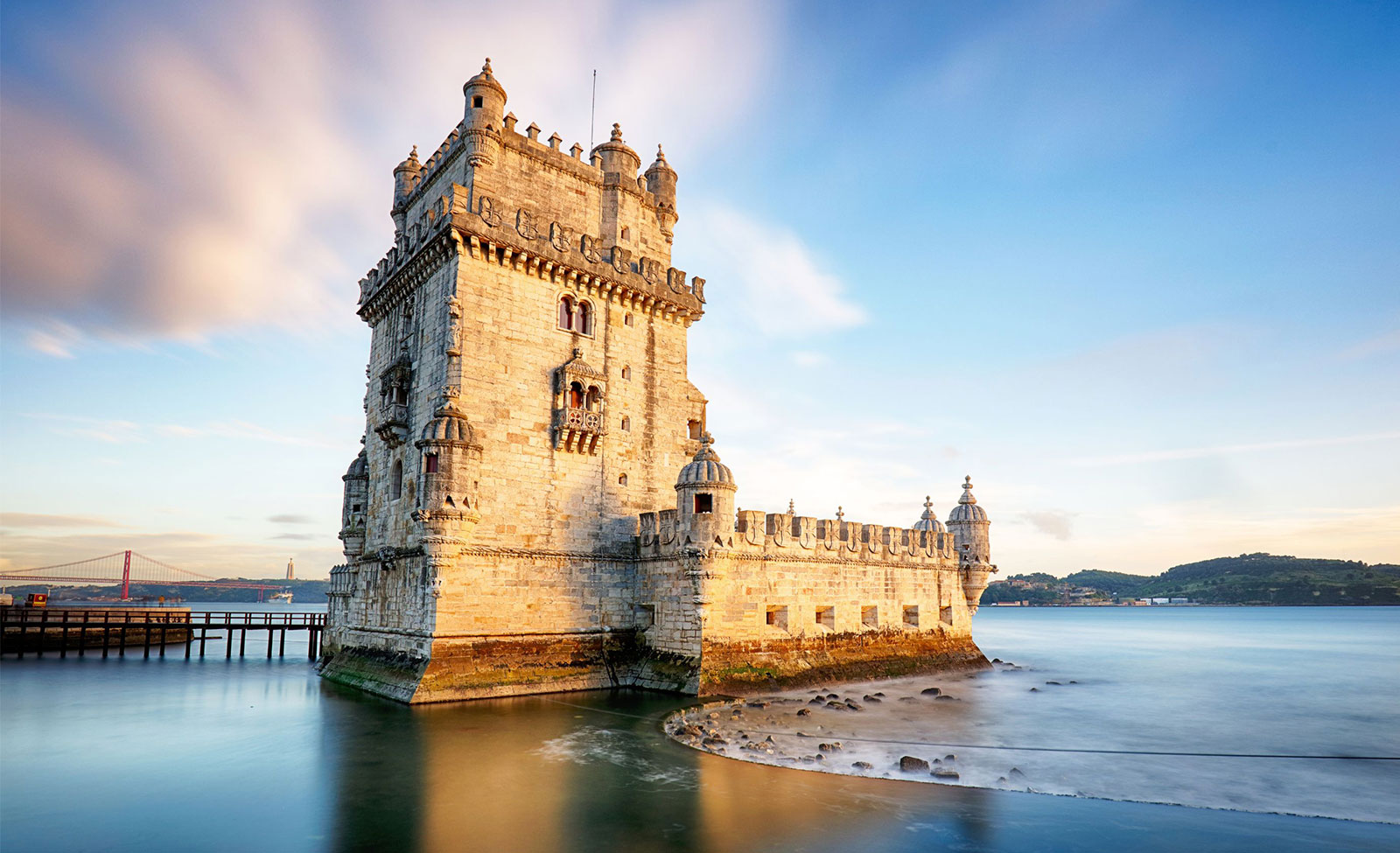
Belém Tower is a 16th-century fortification on the north bank of the Tagus River. It was built as part of Lisbon's defensive system and as a ceremonial gateway to the city. Its Manueline architecture combines Gothic, maritime, Moorish, and Renaissance details, making it one of Portugal's most recognizable monuments. Today, it is a UNESCO World Heritage site and a strong symbol of Portugal's maritime past.
For photography, Belém Tower works beautifully because of its riverside position, limestone texture, and open sky. Sunrise is usually the cleanest time for portraits and travel images because the area is calmer and the light is softer. From the nearby promenade, you can use the river, trees, and open space to frame the tower without standing too close to crowds.
- Permit, Casual: usually not required for small, discreet handheld shoots in public areas
- Permit, Commercial: may be required for professional productions, check Lisboa Film Commission
- Drone: restricted, check ANAC, AAN, and local airspace rules before planning any flight
- Tips: arrive at sunrise for better light, fewer people, and cleaner compositions
📍 Jerónimos Monastery
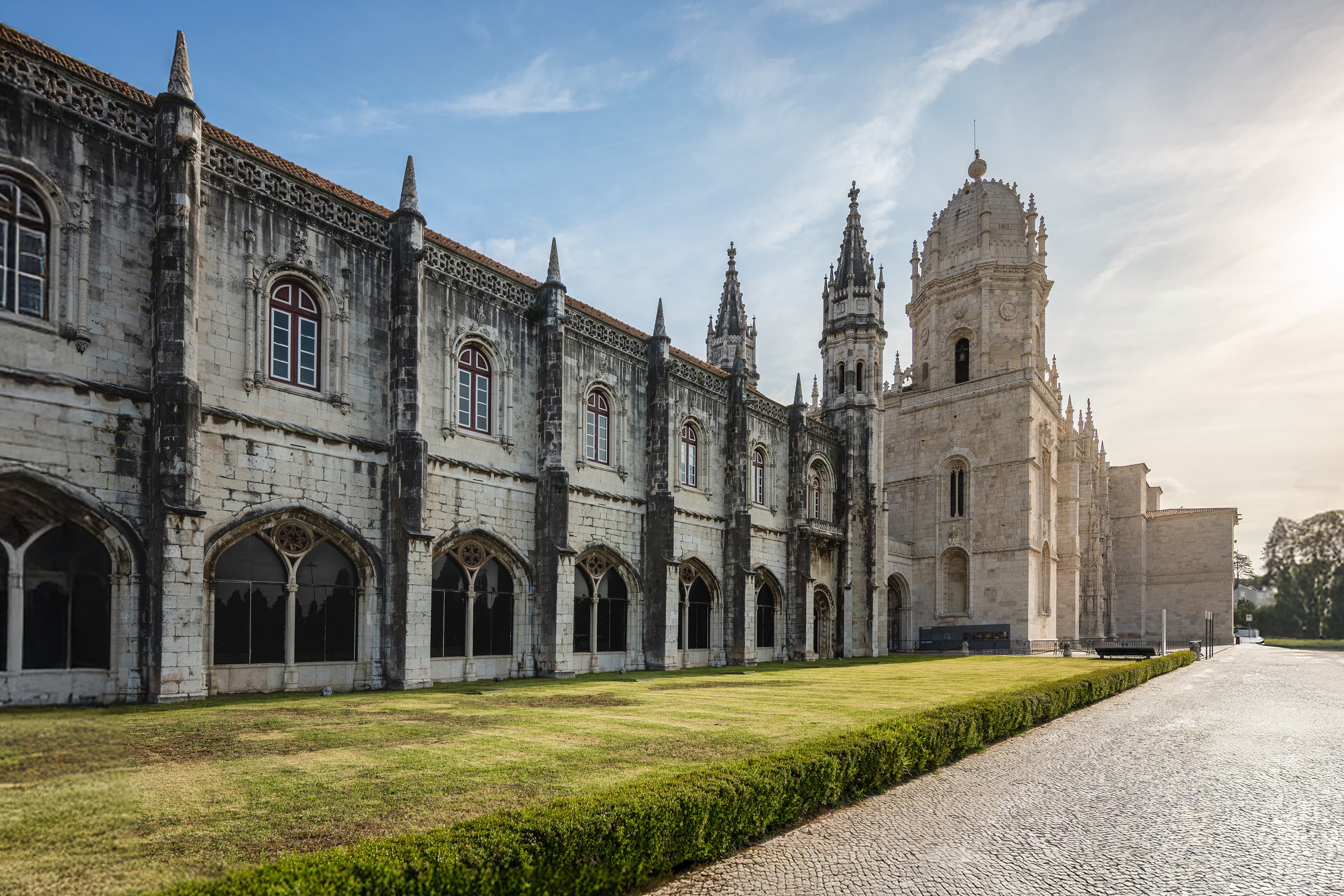
Jerónimos Monastery is one of Lisbon's most important monuments and a masterpiece of Manueline architecture. King Manuel I ordered its construction in the early 16th century, partly funded by the wealth of the Age of Discoveries. The monastery honors Vasco da Gama's voyage to India and became a resting place for explorers and royalty. Its cloisters, carved stone details, maritime symbols, and monumental scale make it one of the strongest architectural locations in Lisbon.
For photographers, Jerónimos offers symmetry, texture, and dramatic stonework. The exterior can work well for portraits and travel photography, especially early in the morning. The cloister and interior areas are more sensitive because this is a protected monument with visitor rules, ticketing, and institutional control. Do not treat it like a normal street location.
Important 2026 note: Jerónimos Monastery is currently partly affected by restoration works and scaffolding, so some exterior angles may be limited or visually compromised. Before planning a client session here, check the official page of Museus e Monumentos de Portugal for current opening hours, access conditions, contacts, and visitor information.
Inside the monastery, especially in the cloister and other controlled areas, professional photography should be done only after permission from the managing authority. Personal tourist photos are one thing; a directed session with clients, formal clothing, equipment, or commercial intent is another. If the shoot matters, contact the site before promising indoor images to a client.
- Permit, Casual: personal tourist photos are generally possible, but be discreet and respect visitor rules
- Permit, Interior: professional or directed indoor photography should be done only after permission from the managing authority
- Permit, Commercial: permission is required for professional, promotional, or production-style work, contact the official site or managing authority
- Drone: prohibited or highly restricted in practice
- 2026 Condition: partly affected by restoration works and scaffolding, so check the official site before planning exact angles
- Tips: avoid tripods, lights, blocking visitor flow, or treating the site like a studio
📍 Praça do Comércio
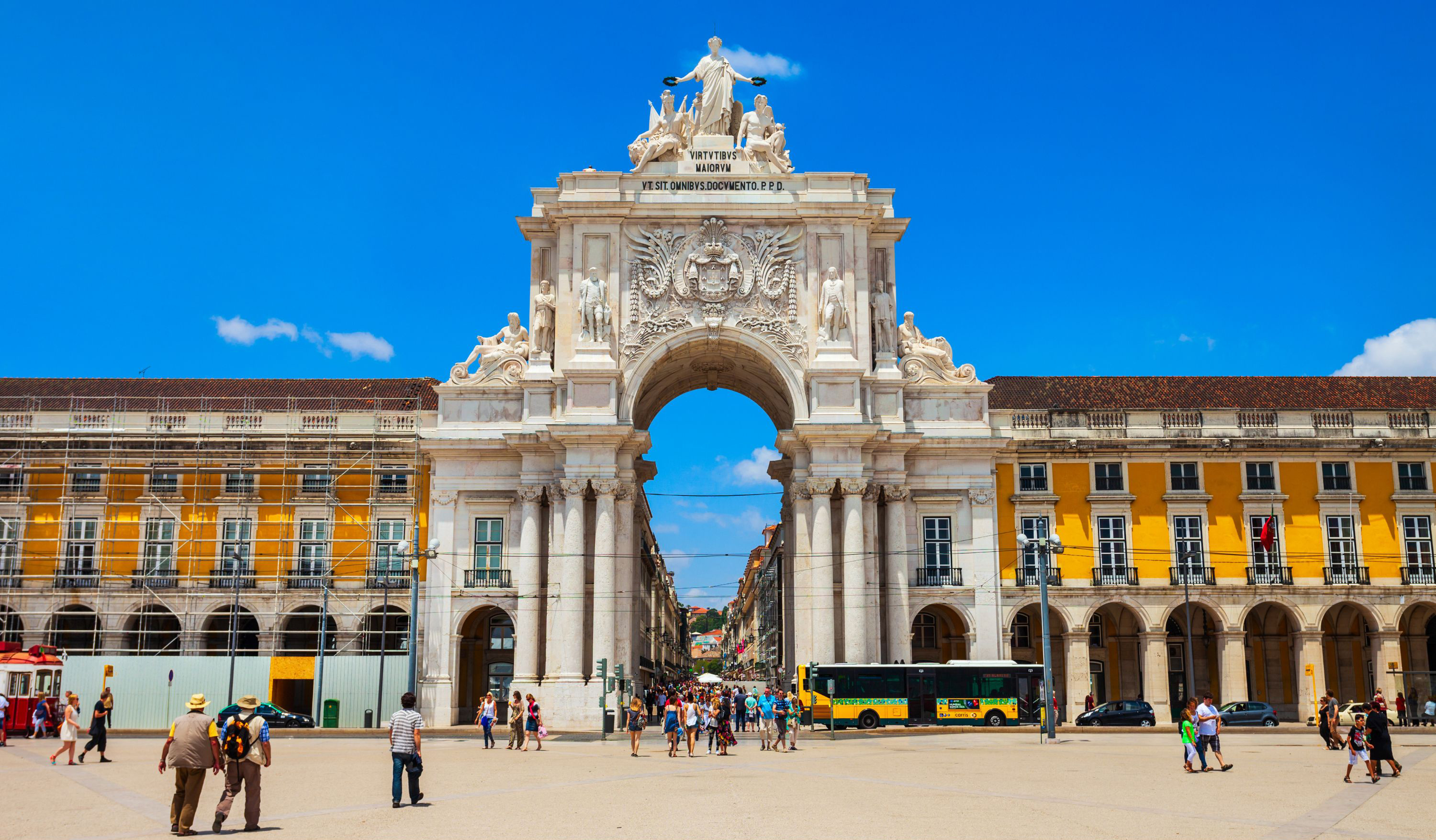
Praça do Comércio is one of Lisbon's grandest public spaces. It opens directly to the Tagus River and has a scale that immediately changes the feeling of a photo session. This was once the location of the royal palace before the 1755 earthquake. The square that came after, with yellow façades, arcades, columns, and the triumphal arch, became a visual statement of Lisbon's reconstruction.
If you shoot here, think in lines, symmetry, scale, and open space. Wide lenses work well, but the arcades and columns also give clean frames for portraits. Early morning gives softer light and fewer people. Later in the day, the square becomes busier and more exposed, which can work for documentary images but makes controlled portrait sessions harder.
- Permit, Casual: usually not required for handheld personal photography
- Permit, Commercial: may be needed for professional productions, especially with equipment or public space occupation
- Drone: restricted, check official drone rules before planning any flight
- Tips: shoot early, stay mobile, and avoid blocking pedestrian flow
📍 Alfama
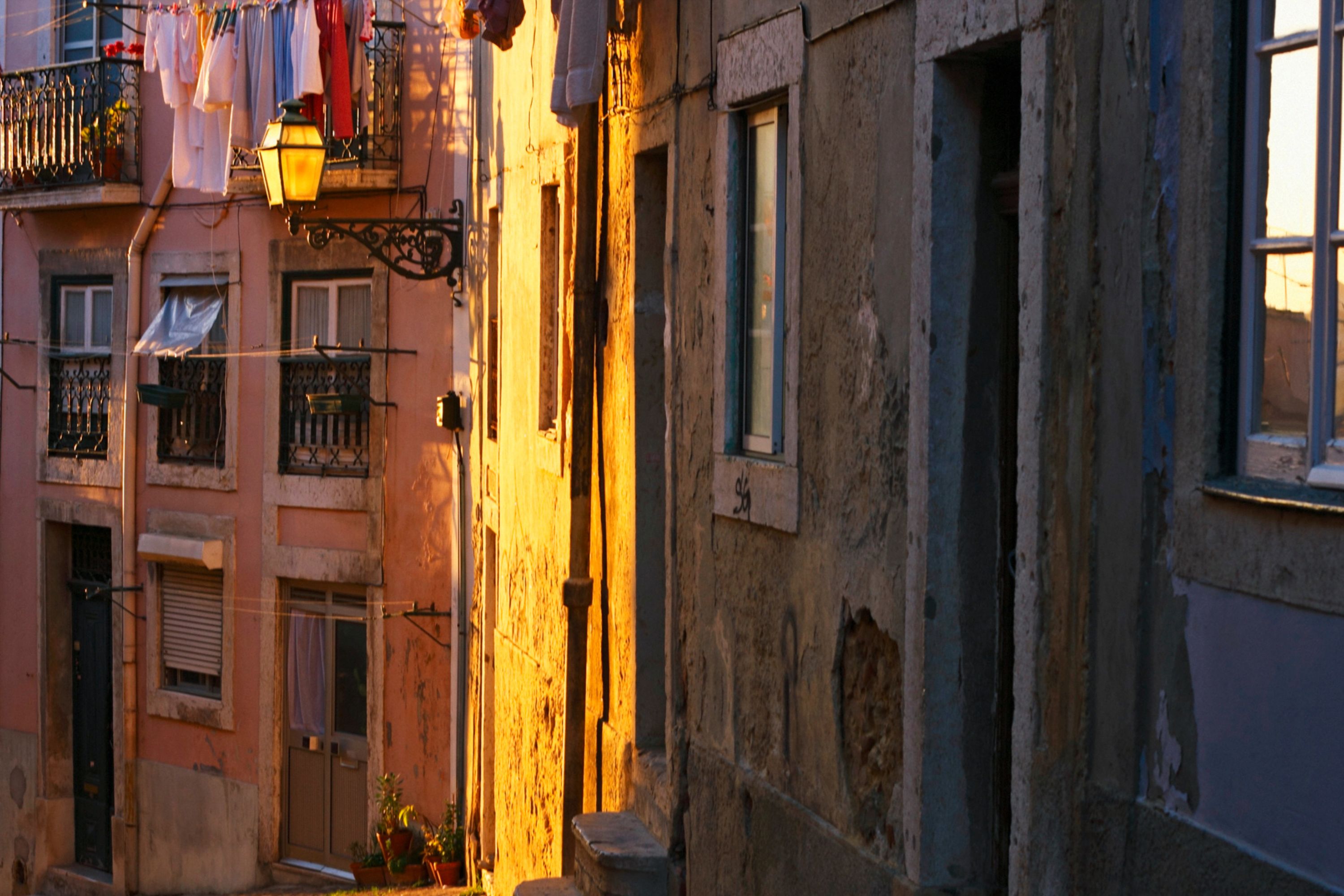
Alfama is one of the oldest parts of Lisbon. Its narrow alleys, staircases, hidden courtyards, tiled walls, and irregular medieval layout survived much of the destruction of the 1755 earthquake. You can still feel the Moorish influence in the street pattern, mixed with daily local life, Fado houses, small restaurants, laundry lines, and viewpoints over the river.
For photographers, Alfama is less about grand monuments and more about atmosphere. Light changes quickly between the narrow streets. A corner can be bright and harsh, while the next staircase is soft and quiet. It works well for portraits, travel sessions, couples, and documentary-style images. The main rule is respect. People live here, so doorways, windows, stairs, and tiny streets should not be treated as a private studio.
- Permit, Casual: usually not required for respectful handheld use
- Permit, Commercial: may be required if the setup becomes visible, disruptive, or production-like
- Drone: not advised because of narrow streets, residents, viewpoints, and airspace complications
- Tips: keep quiet, move often, avoid private entrances, and be considerate of locals
📍 Bairro Alto
Bairro Alto is one of Lisbon's most active and layered neighborhoods. It began in the 16th century and has passed through many lives since then: aristocratic quarter, artistic area, nightlife district, and cultural maze. During the day, the streets are quieter, with cobblestones, balconies, shutters, tiled façades, and traces of the previous night. After sunset, the mood changes completely as bars, music, and crowds fill the narrow streets.
For photos, Bairro Alto gives you 2 different locations in 1. Morning is better for quiet portraits and atmospheric street images. Night is more chaotic, with neon, people, noise, and stronger documentary energy. For a professional client session, early morning is usually safer and cleaner.
- Permit, Casual: usually not required for small handheld shoots
- Permit, Commercial: may be needed if the shoot uses equipment, models, crew, or blocks streets
- Drone: not advised
- Tips: avoid busy nightlife hours unless the chaos is part of the concept
📍 MAAT, Museum of Art, Architecture and Technology
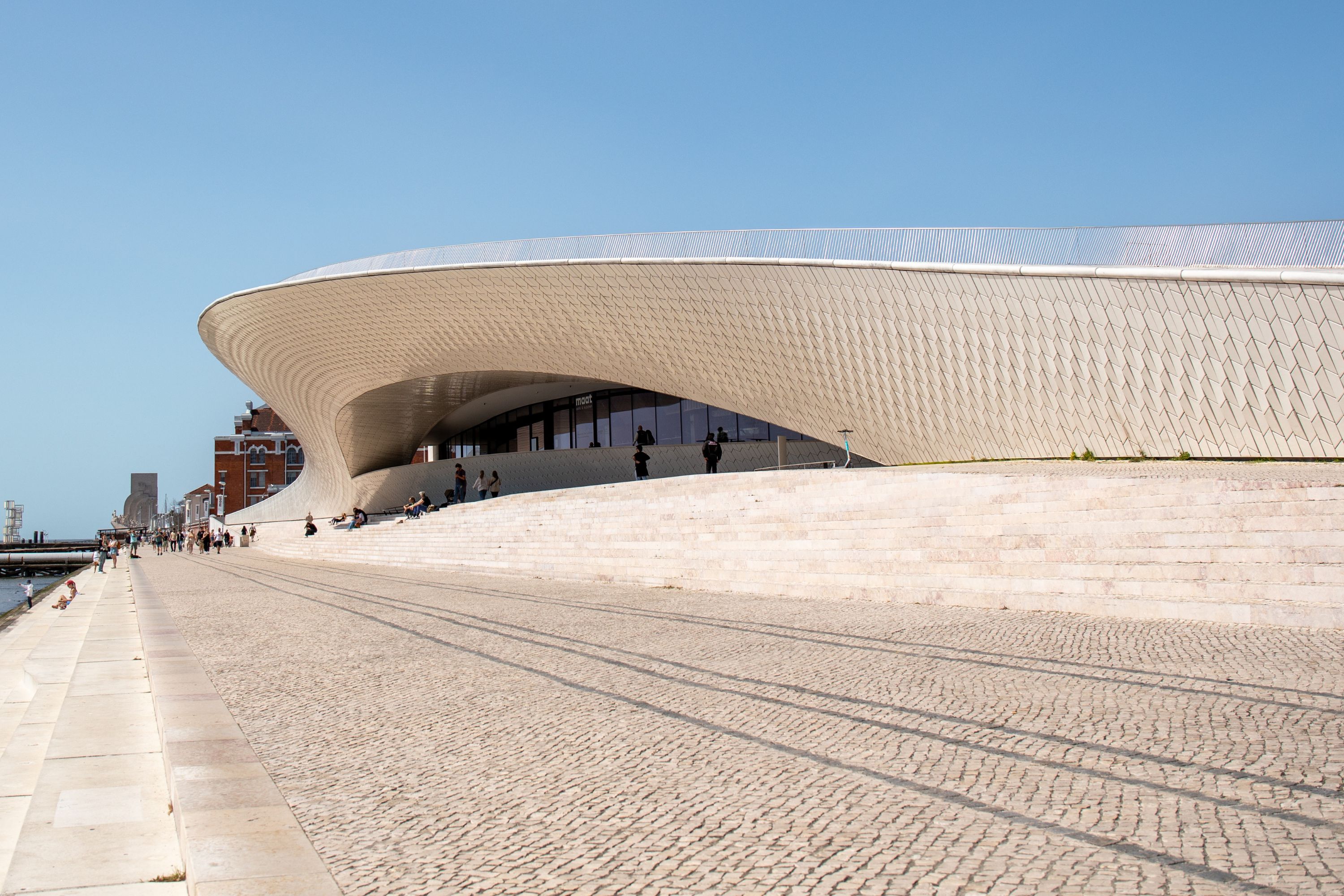
MAAT sits on the Tagus River in Belém and combines 2 very different architectural worlds. One part is the old Tejo Power Station, with brick, steel, and industrial history. The other is the smooth, wave-like contemporary building designed by Amanda Levete and opened in 2016. Together, they create one of Lisbon's most visually modern riverside spaces.
For photography, MAAT is strong because of its shape, surface, reflections, and relationship with the river. The exterior works well for clean portraits, fashion, travel images, and architectural compositions. The rooftop and riverside walk are especially useful around sunset. Interior photography and professional use are more controlled and should be checked with museum management.
- Permit, Casual: usually acceptable for quick personal photos in public exterior areas
- Permit, Commercial: required for professional, promotional, or organized shoots, contact museum management
- Drone: restricted, check airspace and institutional rules
- Tips: respect visitor flow, indoor policies, and private event restrictions
📍 LX Factory
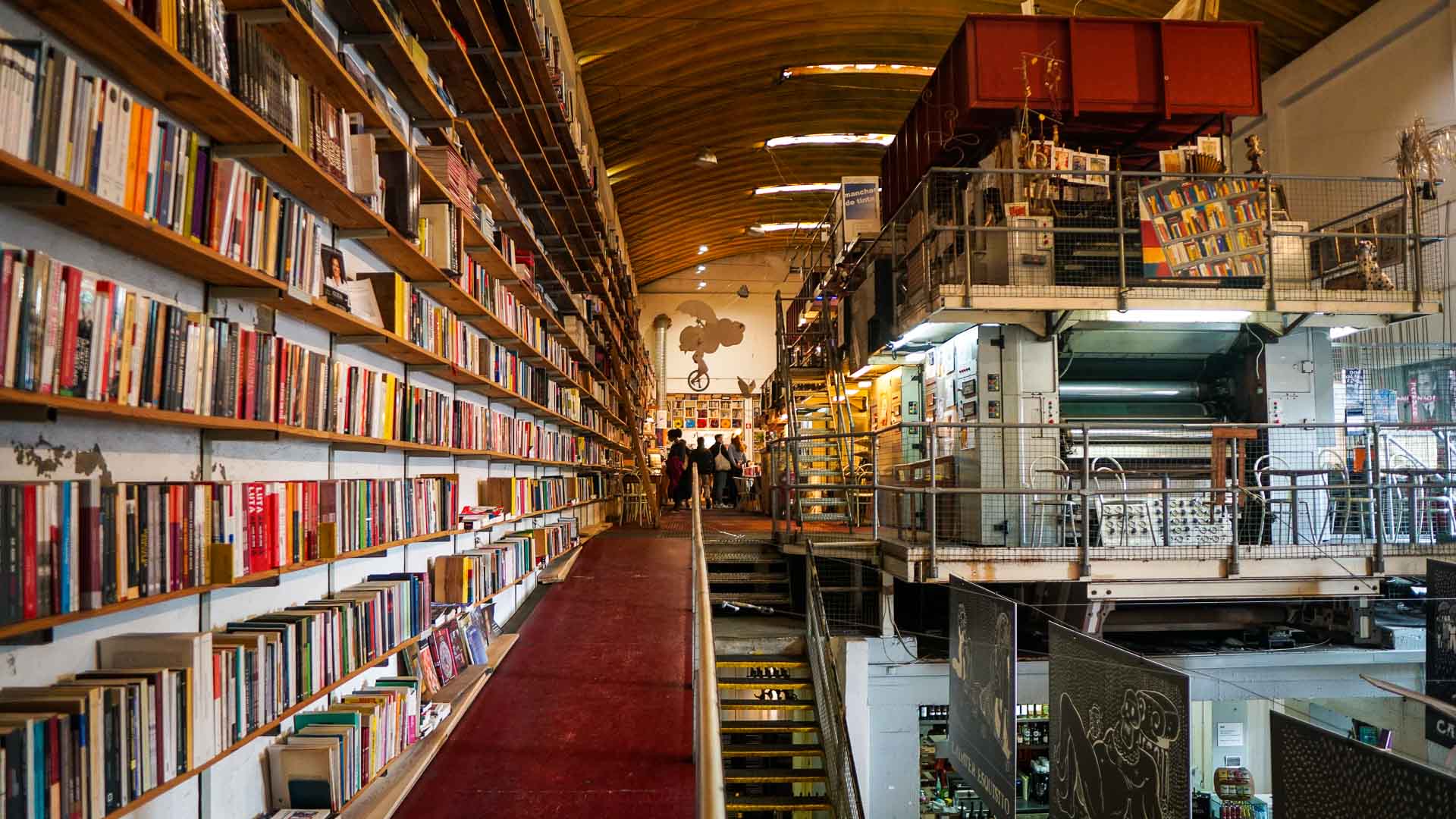
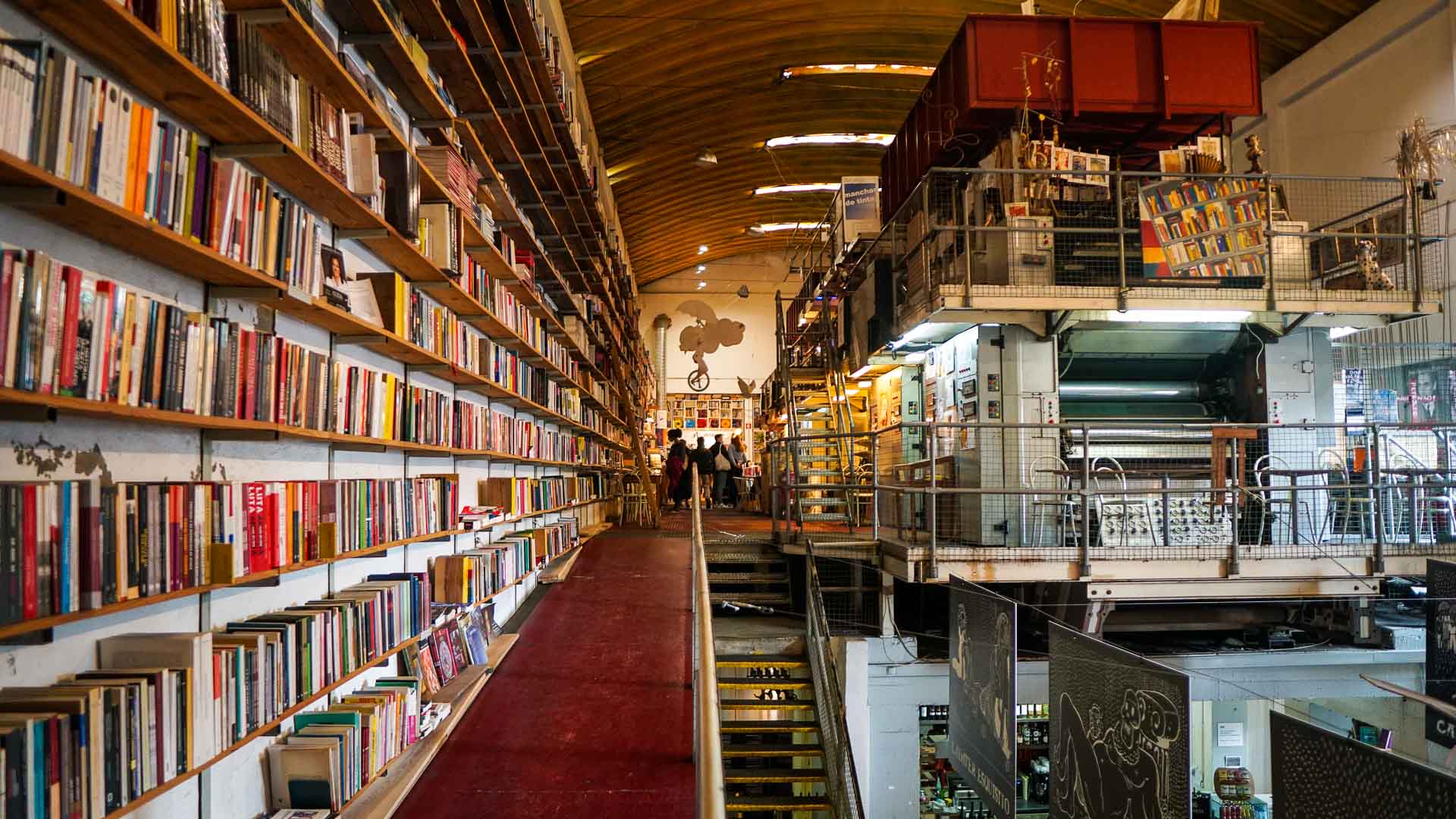
LX Factory sits in Alcântara inside a former industrial complex. Its 19th-century buildings once housed textiles, printing, and other industrial activity. Since its redevelopment, it has become a creative area with cafés, restaurants, shops, studios, offices, murals, events, and one of Lisbon's most photographed bookshops.
For photographers, LX Factory gives a mix of industrial texture, street art, cafés, staircases, brick, steel, and creative energy. But it is not just an open public street. It is a managed commercial area with businesses, visitors, and internal rules. Casual tourist photos are one thing. A professional shoot with a model, crew, or equipment is another.
- Permit, Casual: usually acceptable for tourists and quick personal snapshots
- Permit, Commercial: required or strongly advised, contact LX Factory management before planning a professional shoot
- Drone: restricted and not suitable without authorization
- Tips: respect business operations, avoid blocking shopfronts, and be careful with indoor locations
📍 Miradouros, Lisbon Viewpoints
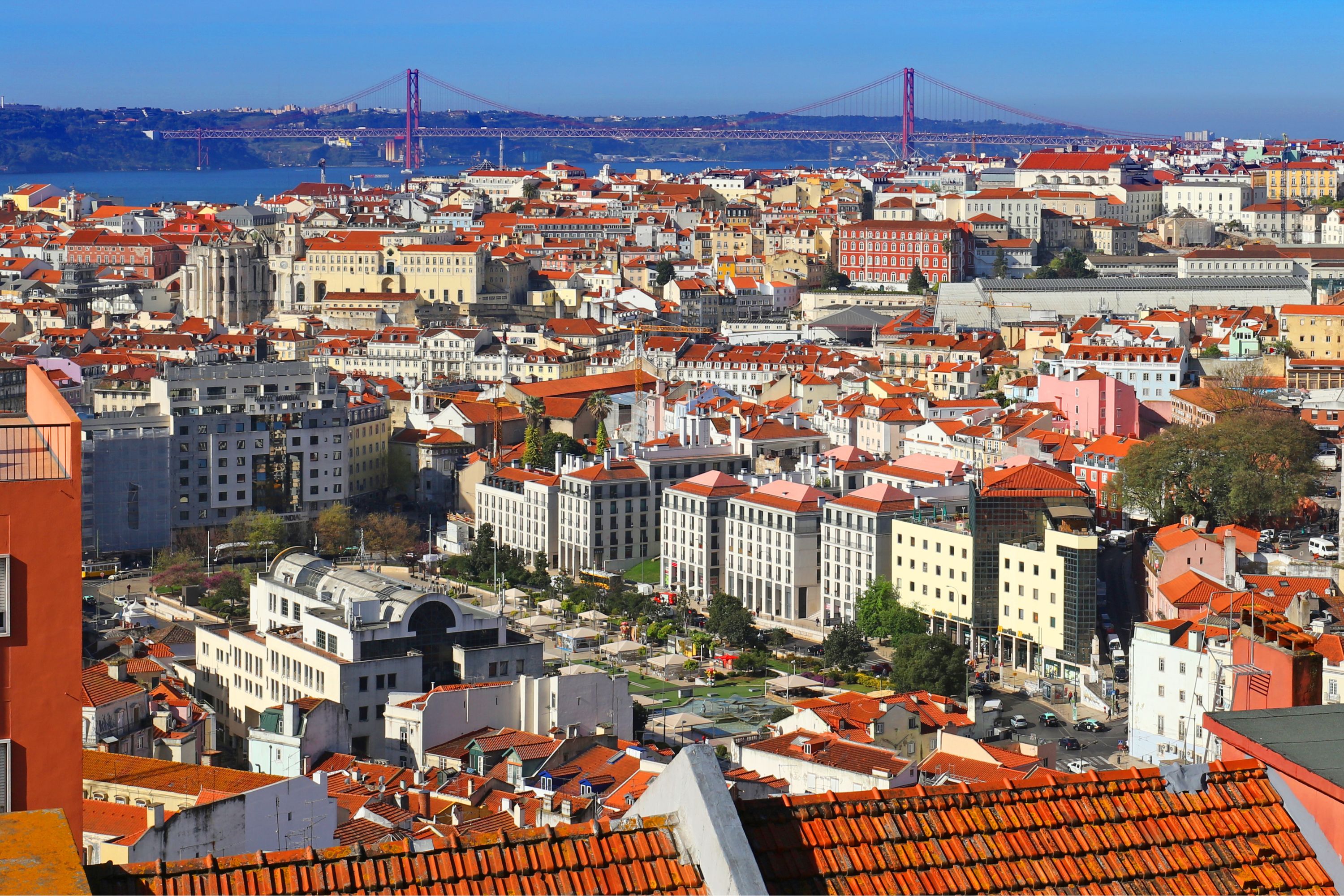
Lisbon's miradouros, or viewpoints, are part of the city's identity. These terraces open onto red rooftops, the Tagus River, bridges, churches, hills, and layers of old streets. Some are quiet in the morning. Others become busy with kiosks, musicians, tourists, and locals.
Some of the most popular viewpoints include:
- Miradouro de Santa Catarina
- Miradouro da Senhora do Monte
- Miradouro de São Pedro de Alcântara
- Miradouro de Santa Luzia
- Miradouro das Portas do Sol
- Miradouro da Graça
- Miradouro do Monte Agudo
For photos, viewpoints are strongest at sunrise or sunset. They work for wide city views, portraits with background layers, travel images, and quiet couple sessions. The weak point is crowding. A big setup can quickly become annoying or unsafe in a small viewpoint.
- Permit, Casual: usually not needed for handheld use
- Permit, Commercial: may be required for large setups or public space occupation
- Drone: use with caution and only after checking official restrictions
- Tips: sunrise is usually best, stay minimal, and do not block railings or viewpoints
📍 Palácio da Pena, Sintra
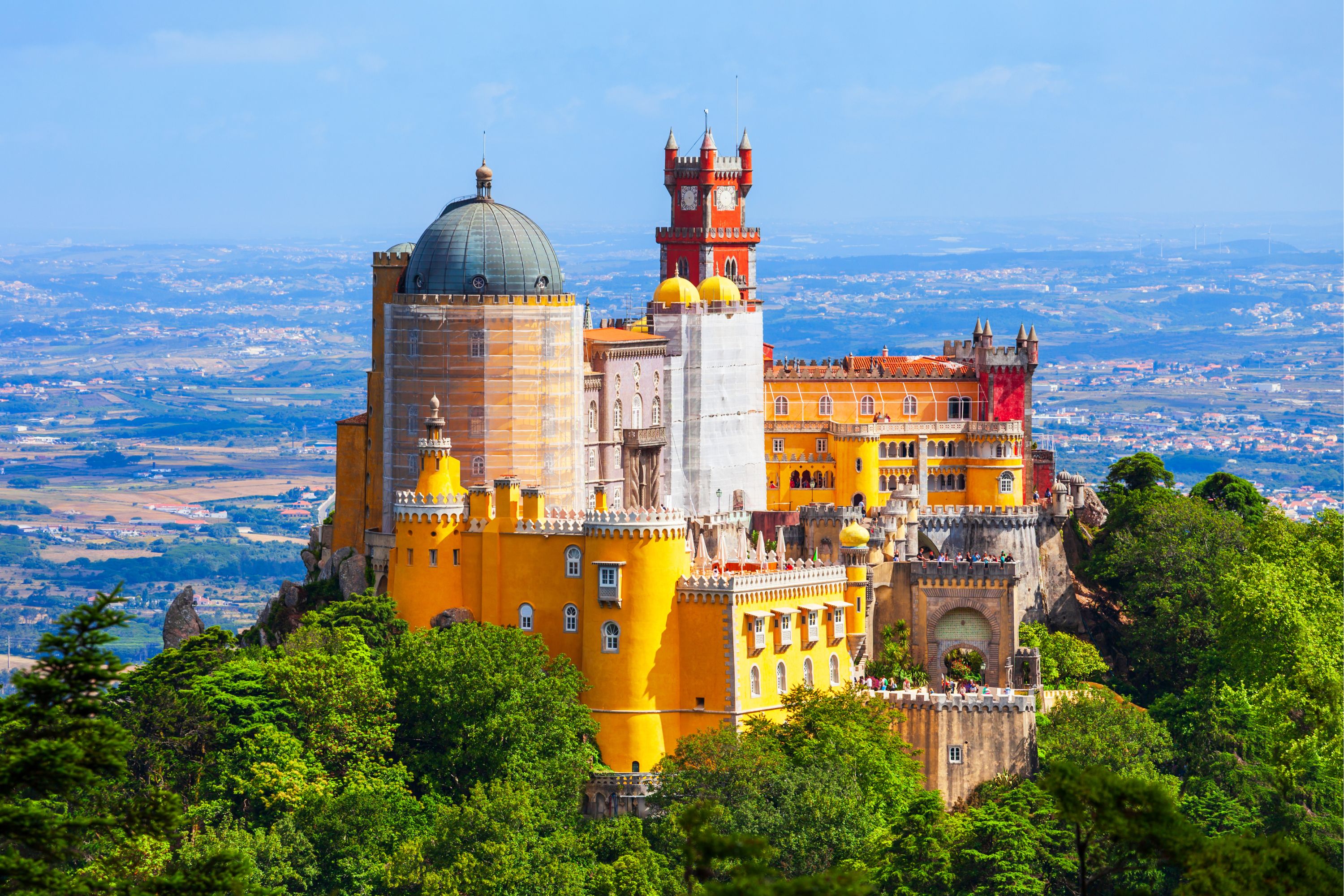
Palácio da Pena is a 19th-century Romantic palace on top of the Sintra Mountains. Before the palace existed, there was a Hieronymite monastery on the site. After serious damage from the 1755 earthquake, King Ferdinand II bought the ruins and surrounding land in 1838 and transformed the place into a summer residence for the royal family. Its Neo-Gothic, Neo-Manueline, Neo-Islamic, and Neo-Renaissance details make it one of the most recognizable monuments in Portugal.
For photography, Pena Palace is visually powerful because of its reds, yellows, towers, terraces, stone details, and surrounding forest. The park also offers paths, gardens, viewpoints, and distant angles of the palace. But this is not a free public location. It is managed by Parques de Sintra, and professional image capture is subject to their rules.
Parques de Sintra manages several monuments and cultural sites in the Sintra area, including Park and Palace of Monserrate, the Moorish Castle, National Palace of Sintra, Park and National Palace of Pena, Convent of the Capuchos, Chalet and Garden of the Countess of Edla, the Gardens and National Palace of Queluz, Villa Sassetti, and the Portuguese School of Equestrian Art. If your shoot is planned in one of these places, check the same official authority first.
According to the official Image Capture and Request page, the monument ticket office charges a heritage image utilization fee of €150. This provides entry to the park, not inside the monuments, for a total of 6 people carrying out the session, including models and photographer. If the group is larger than 6 people, the remaining visitors need to buy garden entrance tickets. This does not mean that every area is available, and it does not replace separate authorization for commercial, advertising, or wider public use.
- Permit, Casual: personal tourist photography is allowed within visitor rules
- Permit, Professional session: check Parques de Sintra and the official Image Capture and Request page before planning
- Fee note: Parques de Sintra lists a €150 heritage image utilization fee for park entry for up to 6 people carrying out the session, not for entry inside the monuments
- Inside the palace: image capture inside the National Palace of Pena is not allowed under the official image capture conditions
- Drone: prohibited or highly restricted, do not plan drone use without explicit authorization
- Tips: exterior areas and the park are the realistic options for professional-looking sessions, but always verify current conditions before the shoot
📍 Park and Palace of Monserrate, Sintra
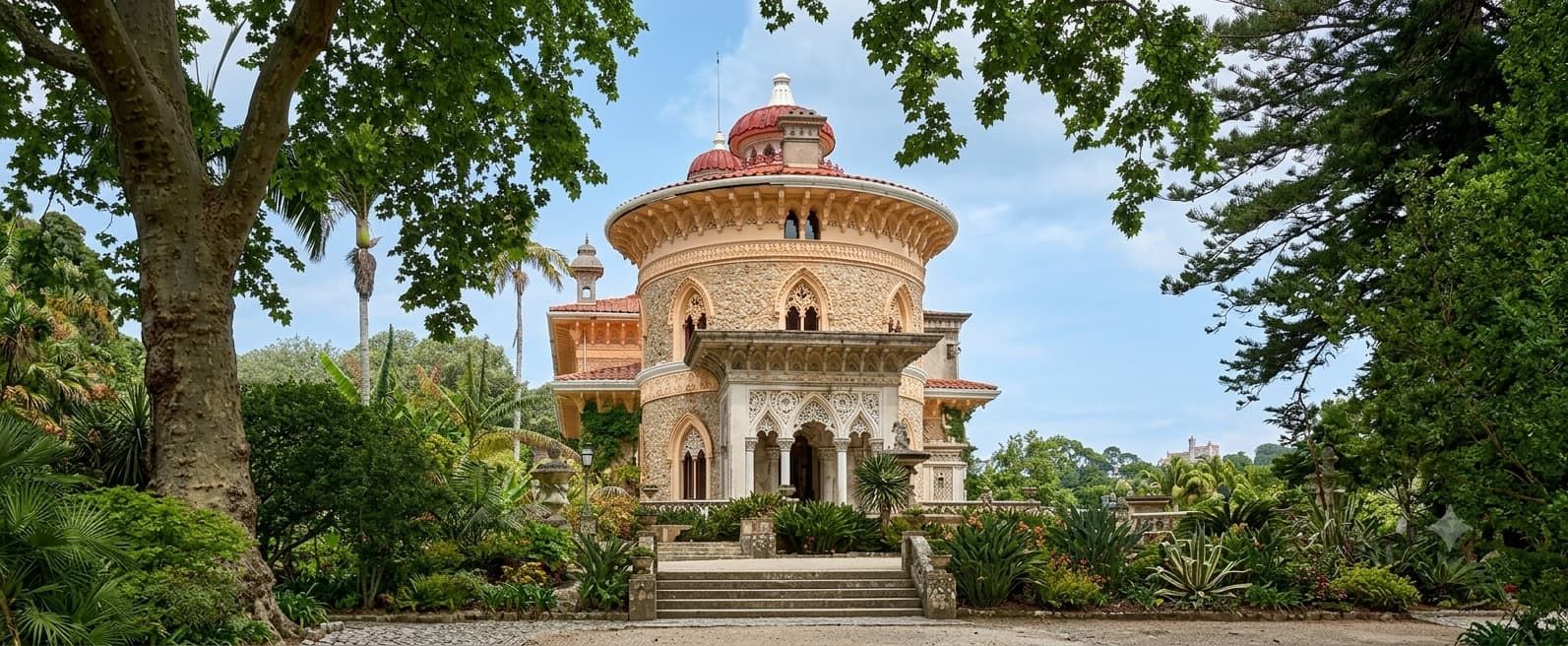
Monserrate deserves a separate place in this guide for a simple reason: it is beautiful. It is one of the most visually elegant locations around Sintra, with exotic gardens, romantic architecture, soft paths, arches, water features, and a quieter mood than Pena Palace. The palace mixes Gothic, Indian, and Moorish-inspired details, while the surrounding park gives many natural frames for portraits, couples, fashion, and editorial-style images.
Monserrate is also managed by Parques de Sintra, so the same authority and image capture logic applies. For professional sessions, you need to check the official Image Capture and Request page before planning. The €150 heritage image utilization fee mentioned by Parques de Sintra provides entry to the park for up to 6 people carrying out the session, but it does not provide entry inside the monuments.
There is also an important 2026 and 2027 practical warning. On the official Monserrate page, Parques de Sintra states: "Palace: restoration works on the roofs are under way until the first quarter of 2027; this involves the installation of scaffolding and a temporary covering on the monument." In Portuguese, the notice says: "Palácio: em curso obra de recuperação das coberturas até ao 1º trimestre de 2027; implica colocação de andaimes e cobertura provisória no monumento." This means Monserrate can still be a beautiful location, but the palace itself may have scaffolding and a temporary protective covering in the frame.
- Permit, Casual: personal tourist photography is allowed within visitor rules
- Permit, Professional session: check Parques de Sintra and the official Image Capture and Request page before the shoot
- Fee note: Parques de Sintra lists a €150 heritage image utilization fee for park entry for up to 6 people carrying out the session, not for entry inside the palace
- Inside the palace: do not assume professional photography is allowed inside, the practical focus should be the park and exterior areas
- Restoration warning: roof restoration works, scaffolding, and temporary covering are expected until the first quarter of 2027
- Drone: prohibited or highly restricted, do not plan drone use without explicit authorization
- Tips: the gardens and exterior views are still excellent, but check current construction impact before promising clean palace photos to a client
📍 Quinta da Regaleira, Sintra
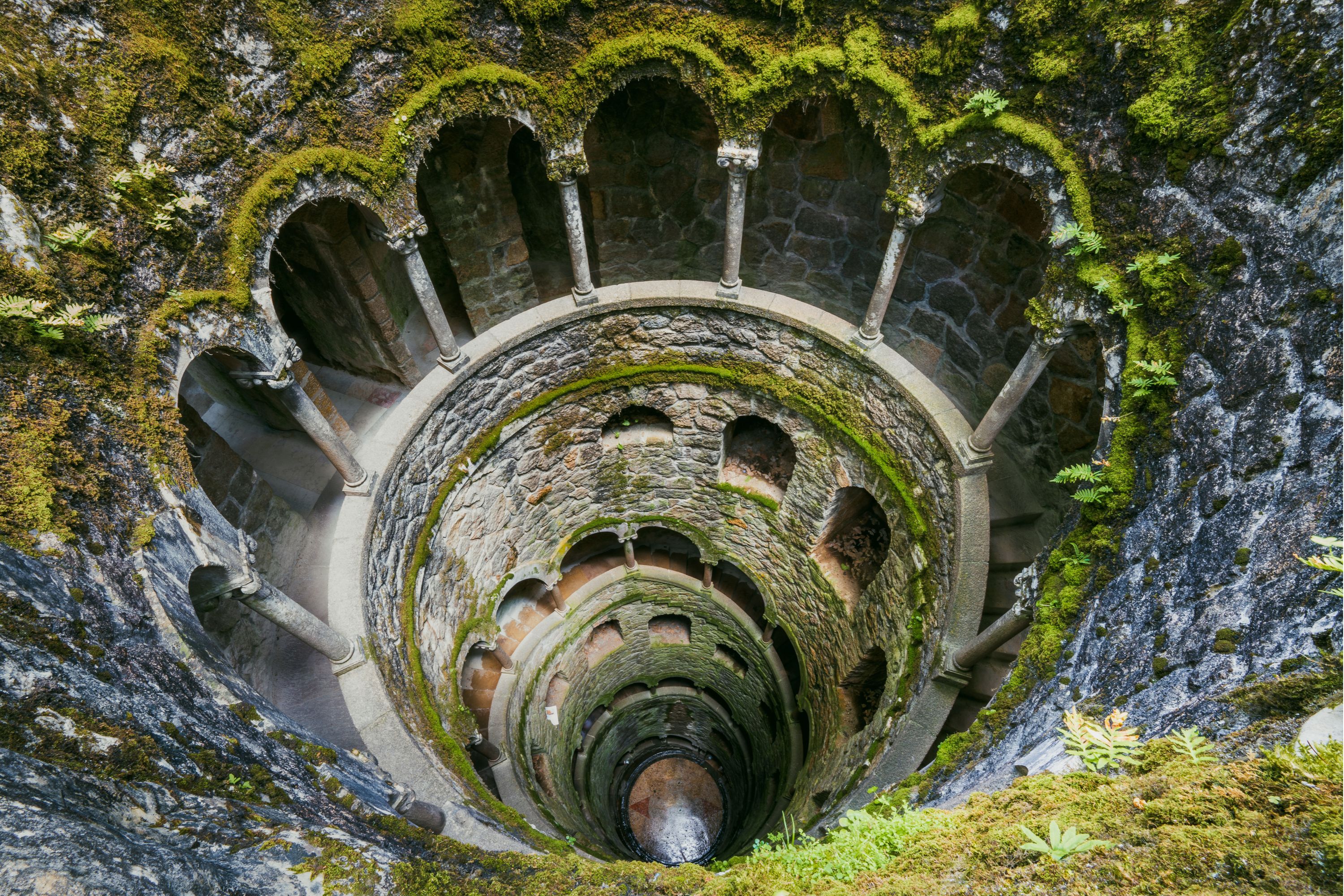
Quinta da Regaleira is one of Sintra's most symbolic and atmospheric estates. Built between 1904 and 1910, it includes a palace, chapel, gardens, tunnels, grottoes, fountains, towers, and the famous Initiation Well. The architecture mixes Gothic, Renaissance, Manueline, and symbolic references connected with alchemy, Masonry, the Knights Templar, and Rosicrucian imagery.
For photographers, Regaleira is tempting because every corner looks like a set: staircases, gardens, stone details, underground passages, water, towers, and theatrical light. But it must not be confused with Parques de Sintra. Quinta da Regaleira is managed separately by Fundação Cultursintra, and it has its own image capture rules, tariffs, and request process.
This is especially important because the €150 Parques de Sintra heritage image utilization fee does not apply to Quinta da Regaleira. The official Regaleira image capture rules must be checked directly before any professional shoot. Do not promise a client a professional session there based on Pena Palace or Monserrate rules.
- Permit, Casual: personal tourist photography is allowed within visitor rules
- Permit, Professional or commercial: mandatory to check directly with Fundação Cultursintra and the official Regaleira image capture rules
- Fee note: do not use the Parques de Sintra €150 fee for Regaleira, it is a different managing entity with different tariffs
- Equipment: flash, lighting, tripod, and production equipment can be restricted or require permission
- Drone: prohibited or highly restricted, do not plan drone use without explicit authorization
- Tips: visit early if going as a tourist, but treat any professional client shoot as a separate permission process
"Pena Palace, Monserrate, and other Parques de Sintra locations are not the same as Quinta da Regaleira. The €150 heritage image utilization fee belongs to the Parques de Sintra image capture process and gives access to the park areas under specific conditions. It does not automatically open interiors, monuments, or other institutions. Regaleira must be checked separately with Fundação Cultursintra."
Dimas Frolov, Photographer in Lisbon
📍 Cabo da Roca
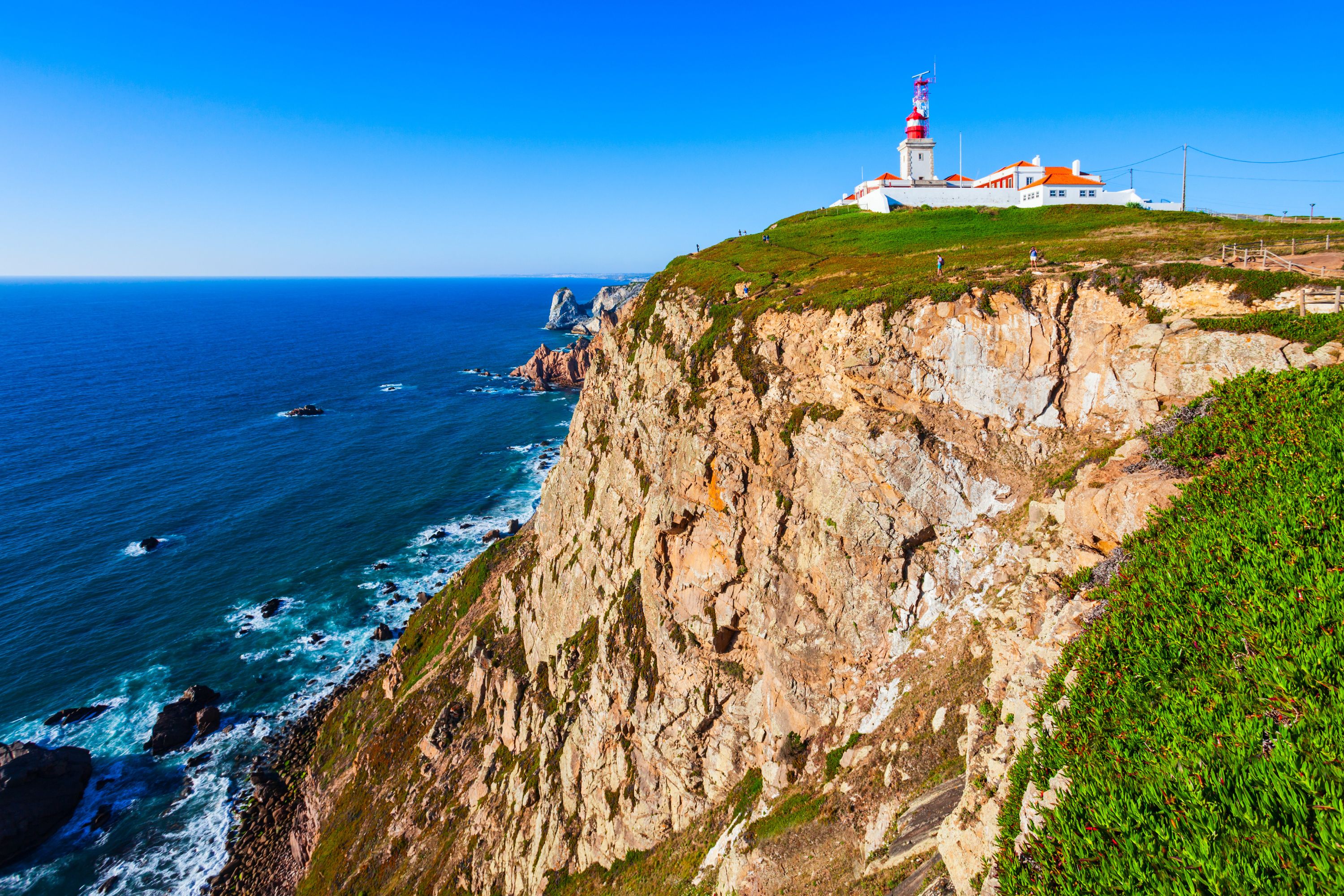
Cabo da Roca is the westernmost point of mainland Europe, located inside the Sintra-Cascais Natural Park. It is a dramatic cliff location where the land drops into the Atlantic Ocean. The lighthouse, stone monument, wind, rough grass, and wide sea views make it one of the most cinematic natural locations near Lisbon.
For photography, Cabo da Roca is powerful but not easy. The wind can be strong, the cliffs are dangerous, and the light changes quickly. It works well for couples, portraits, travel images, and landscape photography, especially around golden hour. Safety matters more than the photo here.
- Permit, Casual: usually not required for light, quick handheld shoots
- Permit, Commercial: may be needed for larger productions, organized shoots, or public space occupation
- Drone: check ANAC, AAN, environmental, and local restrictions before planning any flight
- Tips: stay far from cliff edges, bring wind-resistant clothing, and avoid risky posing
📍 Costa da Caparica Beaches
Costa da Caparica is a long coastal area south of Lisbon, known for its Atlantic beaches, surf culture, fishing traditions, dunes, and wide open skies. The coast stretches for many kilometers and gives very different moods depending on the beach, season, tide, and time of day.
For photographers, Costa da Caparica works well for beach portraits, couples sessions, swimwear, lifestyle, surf, and documentary photography. Golden hour is usually the best time because the light is lower and the beach feels less harsh. In summer, crowding becomes the main problem, so choosing the right beach and time matters.
- Permit, Casual: usually not required for simple handheld beach photos
- Permit, Commercial: may be required for organized productions, brand shoots, large setups, or reserved space
- Drone: use with care and only after checking airspace, beach, crowd, and environmental restrictions
- Tips: choose golden hour, check tide and wind, and avoid disturbing beach users
Expert Opinions
Let me share a quick story. I once did a small shoot in Alfama, just me and a model, using natural light and staying discreet. Even then, a local resident politely asked us to move slightly because we were close to their doorway. We moved immediately, and after that they even suggested a quiet alley nearby. That moment was a useful reminder: in Lisbon, respect often matters as much as the formal rule.
"From my years of photographing in Lisbon, I have learned that building rapport with the local community is just as important as understanding formal regulations. A friendly approach and genuine respect for the people who live there will often open more doors than a permit alone. When in doubt, a quick, polite inquiry with the local council or site management can save time and prevent complications."
– Emanuele Siracusa, Lisbon-based professional photographer
I also remember a colleague planning a larger shoot near Belém Tower. They assumed that because the area was public, nothing would be needed. But the setup looked like a production, with equipment and a visible team. They were delayed because they had not clarified the shoot with the city in advance. The lesson is simple: for bigger productions, pre-planning is not bureaucracy, it is risk control.
"While many public spaces in Lisbon offer fantastic photographic opportunities, professionals must differentiate between personal and commercial use. Commercial shoots, especially those involving significant setup or potential impact on public flow, often require authorization. Familiarizing yourself with the local council's guidelines and being proactive in seeking necessary permissions ensures compliance and avoids potential legal issues."
– Renan Skaf, professional photographer
Eyes in the Sky: Drone Information
Drone use in Portugal is regulated separately from normal photography. A place can be fine for handheld photos and still be unsuitable or illegal for drones. In practice, drone operators need to check ANAC rules, airspace restrictions, registration requirements, operating category, insurance where applicable, and aerial image authorization where relevant. Lisbon, Belém, Sintra, coastal cliffs, beaches, military areas, airports, and crowded tourist zones should all be treated as sensitive until checked.
- Use the official ANAC UAS portal for drone registration and operation information.
- Use the ANAC Open Category Guide to understand basic categories and limits.
- Check the official Autoridade Aeronáutica Nacional when aerial image authorization is required.
- Use the Voa na Boa app to check restrictions before planning a drone flight.
- Never fly over crowds or near airports, monuments, roads, emergency areas, or sensitive sites without proper authorization.
- For professional work, treat drone planning as a separate permission process, not as a small addition to a normal photoshoot.
Final Thoughts
Lisbon is a very photogenic city, but it is not permit-free. A small, respectful handheld session is usually simple. A professional production, a visible client shoot, a fashion editorial, a wedding session, a brand shoot, or anything involving equipment may need permission. Sintra requires even more care because places like Pena Palace, Monserrate, and Regaleira are managed heritage sites with their own rules.
The safest practical rule is this: if your shoot looks like tourism, stay discreet and respectful. If it looks like production, check first. Official rules and fees can change, so always verify everything on the official websites before confirming a location with a client.
Official Documents, Links, and Guides
Here are the official government and institutional portals for photography and drone licensing in Lisbon and Sintra. This section was reviewed for 2026, but rules and fees can change. Always check the official source before planning a professional shoot.
1. Commercial Photography & Filming Permits, Lisbon City
Professional shoots in public spaces or municipal buildings may require licensing, prior communication, or confirmation from Lisboa Film Commission, depending on the type of production and public space impact.
- Lisboa Film Commission: Lisboa Film Commission
- Official licensing page: Filmagens e sessões fotográficas, licenciamento
- Simplified prior communication: Filmagens e sessões fotográficas, comunicação prévia
- Official 2026 guide: Guia de Filmagens em Lisboa 2026
2. Drone Operations, ANAC and AAN
Drone operation in Portugal follows aviation rules and can also require aerial image authorization. Do not assume that a photography permit automatically allows drone use.
- Registration portal: UAS ANAC Portal
- General rules: ANAC Open Category Guide
- Aerial image authority: Autoridade Aeronáutica Nacional
- Voa na Boa app, Google Play: Voa na Boa on Google Play
- Voa na Boa app, App Store: Voa na Boa on App Store
3. Parques de Sintra, Pena Palace, Monserrate, and Other Managed Sites
Parques de Sintra manages several important monuments and parks in the Sintra area. Their image capture rules are especially relevant for professional sessions at Pena Palace, Monserrate, the Moorish Castle, National Palace of Sintra, and other managed sites.
- Official website, English: Parques de Sintra
- Image capture rules: Image Capture and Request
- Park and Palace of Monserrate: Park and Palace of Monserrate
- Monserrate works notice: Refurbishment works at the Palace of Monserrate
Sites managed by Parques de Sintra include:
- Park and Palace of Monserrate
- The Moorish Castle
- National Palace of Sintra
- Park and National Palace of Pena
- Convent of the Capuchos
- Chalet and Garden of the Countess of Edla
- The Gardens and National Palace of Queluz
- Villa Sassetti
- Portuguese School of Equestrian Art
Important fee note: the Parques de Sintra image capture page states that a heritage image utilization fee of €150 is paid at the monument ticket office. It provides entry to the park, not inside the monuments, for up to 6 people carrying out the session, including models and photographer. Always read the full official conditions before planning the shoot.
4. Quinta da Regaleira
Quinta da Regaleira is managed separately by Fundação Cultursintra. Do not apply Parques de Sintra fees or rules to Regaleira without checking the official Regaleira rules directly.
- Official image capture rules: Regaleira Image Capture Norms
- Application email listed by Regaleira:
producao@cultursintra.pt
5. Practical Compliance Rule
For casual handheld photography, most public street locations in Lisbon are usually simple if you are respectful and do not block anyone. For professional work, the risk starts when the shoot involves clients, models, equipment, public space occupation, formal styling, commercial use, drones, or managed heritage sites. Check the official rules before the shoot, not after a guard or site manager stops you.